Published: July 7, 2026
Last Updated: August 31, 2026
Every headphone ad out there promises quiet on your next flight. Scroll through the options, though, and you’ll find a dozen models making that same claim, with prices ranging from three thousand rupees up past forty thousand. That’s the actual problem. Picking noise cancelling travel headphones isn’t hard because the options are bad. It’s hard because most of them are good, and the reviews rank them by sound quality in a treated room, not by how they hold up on a red-eye with a dying phone and a seatback screen you can’t plug into.
So this guide sorts them a different way. First comes the quick answer. After that, picks sorted by how you actually travel, plus something most premium roundups skip entirely: a straight take on the in-flight entertainment adapter question. Pressed for time? Jump straight to the table below.
Key points: For most people shopping in 2026, the Sony WH-1000XM6 is the one to buy. It has the strongest all-round ANC of the bunch and a folding design that actually fits a carry-on without a fight. Long-haul comfort is where Bose’s QuietComfort Ultra takes over instead, while the Sennheiser Momentum 4 wins on raw battery life alone. Watching the budget? The Soundcore Space One holds up better than its price tag suggests.
Definition
That steady drone you stop noticing by hour two of a flight, the plane’s engines humming somewhere in the 100 to 300 Hz range, is exactly what wears you down without you realizing it. Portable over-ear or in-ear headphones built around active noise cancellation go after that specific sound. Not just for cleaner music. The real payoff shows up when you land after a ten-hour flight without the low-grade fatigue that comes from your ears fighting engine hum the entire way.
Best noise cancelling travel headphones at a glance
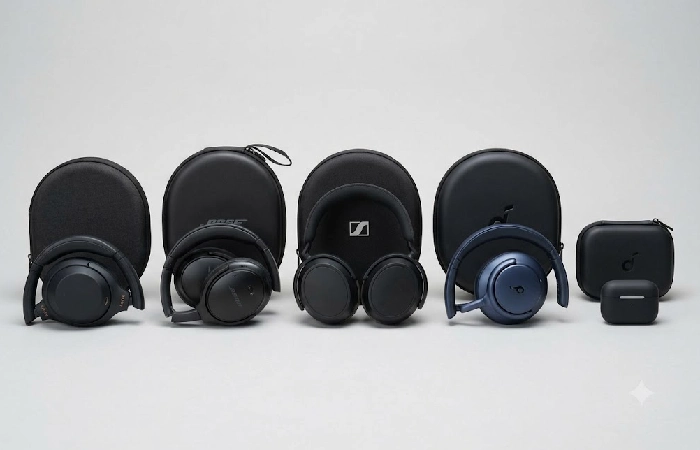
The Sony WH-1000XM6 is the one most people should buy in 2026. Its ANC leads the category outright, and it packs about 30 hours of battery with cancellation switched on. The folding design matters too, since it’s the difference between these headphones tucking neatly into a carry-on and eating half your bag. Comfort matters more than ANC strength on a long-haul route, though, and that’s where the Bose QuietComfort Ultra takes over instead.
What actually matters when you’re thirty thousand feet up
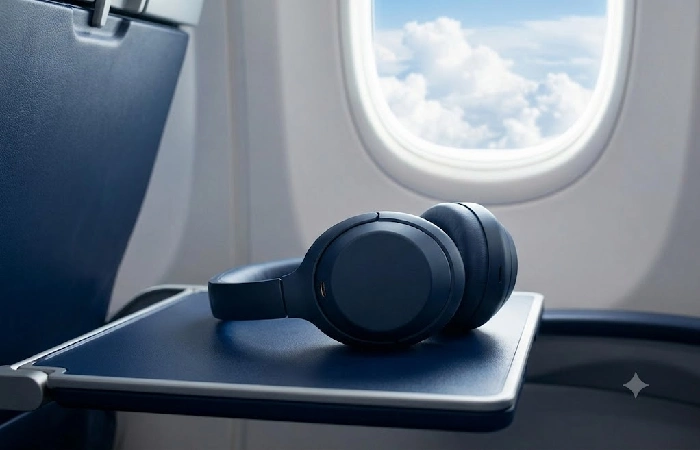
Cabin noise sits mostly in the low frequencies. That steady engine drone. Active cancellation handles that kind of sound well, which is why even mid-tier ANC does more on a plane than in a noisy cafe. Forget chasing the best possible sound quality here. What you actually want is ANC that holds steady against a low rumble for hours straight.
Battery is next, and flight length changes the math here. A 30-hour headphone covers a return trip to most places with charge to spare. That math shifts fast on a real long-haul route. Delhi to San Francisco with a layover pushes total transit time, gate waits included, somewhere between 20 and 24 hours, and anything rated lower than that leaves you cutting it close before you’ve even reached the hotel. Comfort is the quiet dealbreaker. A pair that feels fine for twenty minutes in a store can start pressing on your ears by hour four, and this is the part most people get wrong when they shop on ANC specs alone.
Charging speed matters more than most buying guides admit, especially standing at a gate with 20 percent battery and ten minutes before boarding. The Sony XM6 gives back three hours of playback from a three-minute charge. Sennheiser needs about five minutes to hand back four hours on the Momentum 4. None of that helps if the battery was already dead before you left the house, but it’s the difference between panicking at the gate and just plugging in while you wait to board.
None of the four picks here carry meaningful water resistance. A humid layover or a sudden downpour on the way to the gate is a real risk with any of them, not just a footnote buried in the spec sheet.
Two more things earn a look. Multipoint Bluetooth keeps you paired to your phone and laptop at the same time, so a call doesn’t mean re-pairing mid-flight.
Call quality is worth checking before buying too. Making a call from a busy gate area asks more of a headphone’s microphones than a quiet room does, and it’s an area where models differ more than spec sheets ever show. It’s also tested less consistently across headphones than noise cancellation or battery life. Treat any single claim about call clarity with a bit of caution, and check a couple of independent reviews if that’s something that matters for how these get used.
Whether the pair folds down matters more than it sounds when your personal item is already full. RTINGS and SoundGuys both rank the Sony, Bose, and Sennheiser near the top of the category for air travel specifically, not just general listening. One 2026 flagship quietly reversed course on folding this year, and that’s worth unpacking before you buy based on case size alone.
Over-ear or earbuds for the plane?
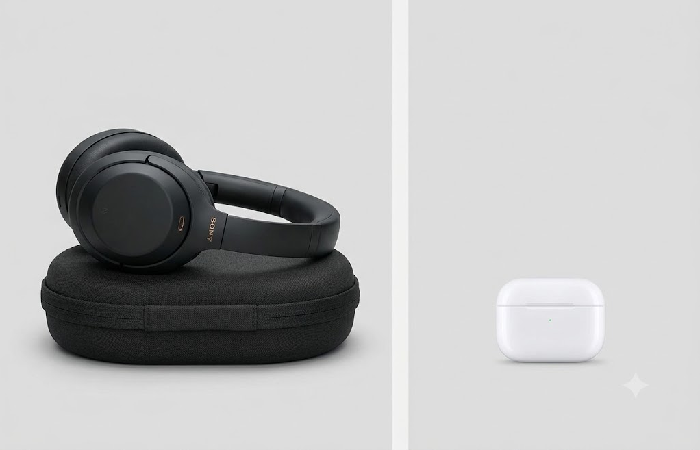
Over-ear wins the seal test outright. The cushions press against your skull and block sound physically, on top of whatever the ANC chip is doing electronically, and that combination runs longer per charge than any earbud can manage. Get a good pair and you can drift off sitting upright somewhere over the Atlantic without the drone keeping you awake.
Earbuds win a different fight: bulk. Wireless noise-cancelling earbuds for travel disappear into a jacket pocket, skip the headband clamp entirely, and the better models now cancel almost as well as full-size cans do. Runtime is where they fall short. Most give you six to eight hours before they’re back charging in the case, which covers a short domestic hop fine and leaves you scrambling somewhere over the Pacific on anything longer.
Pick over-ear for long flights and cold cabins. Pick earbuds if you’re moving light or you can’t stand a headband.
Anyone locked into an iPhone and a Mac should give the AirPods Pro 3 a closer look. Switching between the two happens on its own, no digging through a Bluetooth menu at the gate, and the spatial audio tuning is built specifically around Apple’s own ecosystem. The tradeoff is the same one every earbud on this list carries: six to eight hours before the case takes back over.
The picks, matched to your trip
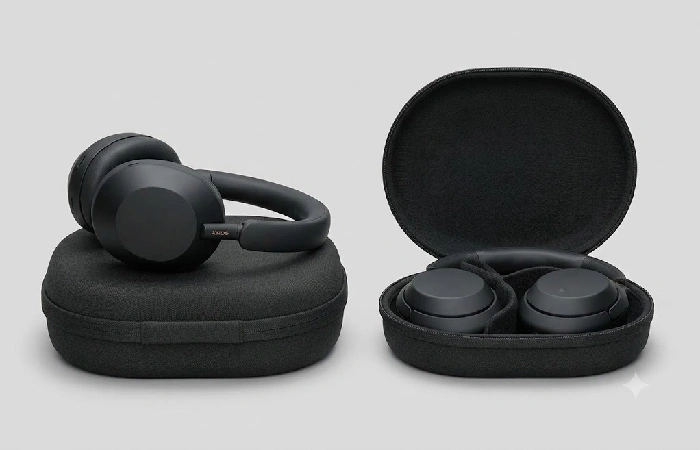
Best overall: Sony WH-1000XM6
For most travelers, this is the one to buy. Its ANC is the strongest all-round performer right now, the app gives you genuine control, and battery lands around thirty hours with cancellation on. Independent battery testing has shown it running closer to 37 hours in real-world use, so Sony’s rating is conservative if anything. Sony’s 1000X THE COLLEXION and Sennheiser’s Momentum 5 have both launched since this comparison first went up, and sure, they sound better in a quiet room. Neither makes sense for a flight. The COLLEXION skips folding entirely, and the Momentum 5 runs about three hours less battery than the model it replaced.
Best long-haul comfort: Bose QuietComfort Ultra (2nd Gen)
Bose still owns comfort. Lighter clamp, plush cushions, a fit you stop noticing somewhere over the ocean. Glasses wearers usually notice clamp force before anyone else does. A tight headband pushes the arms of your glasses straight into your skull after a few hours, and that’s often where a cheaper pair falls apart on a long flight. That’s often why glasses wearers reach for the QC Ultra over the Sony.
Its ANC sits right beside Sony’s on steady low-frequency noise. You get up to 30 hours with ANC running, or 23 if Immersive Audio is switched on, and that spatial mode is really the only thing worth turning off if you’re squeezing for every last hour on a long trip.
Best for long battery life travel headphones: Sennheiser Momentum 4
Sixty hours before you need a charger again. That’s the headline, and it holds up. If your trip crosses time zones with no easy outlet, or cables are just annoying to deal with, this is the pick.
Sound leans warm and easy here. The ANC won’t quite catch Sony or Bose, but it holds up fine.
The Bowers & Wilkins Px7 S3 deserves a mention. It got a redesign in April 2025, bumping mic count from six to eight and adding aptX Lossless support up to 24-bit/96kHz. Noise cancellation now sits close to Sony and Sennheiser, and sound quality edges out both. It’s not on the main list because of price. It’s positioned closer to home listening gear than travel, and the case won’t fold down for a carry-on like the others here.
Best foldable noise cancelling headphones: Sony WH-1000XM6
Worth calling out on its own. The XM5 didn’t fold at the hinge, and plenty of travelers grumbled about the bulkier case. The XM6 brought folding back, so it collapses into a smaller shape that actually tucks beside a laptop. If a compact case is your deciding factor, that reversal is the reason to pick it.
One thing worth knowing: some reviewers find the redesigned hinge a bit finicky, and the case isn’t dramatically smaller than the one it replaced. It still fits a carry-on fine, just not as smoothly as Sony’s older design did.
Best budget ANC headphones for travel: Soundcore Space One
Around a hundred dollars, or roughly nine thousand rupees. ANC that beats what the price suggests, forty-plus hours of battery, and a fold-flat design. You give up some sound refinement and the premium app polish. Tough to argue with as a first ANC pair or a knockaround travel set. Kill the ANC entirely and runtime jumps to around 55 hours, the number that matters on a long-haul red-eye when you just want to sleep through without hunting for an outlet.
The in-flight entertainment adapter question nobody answers
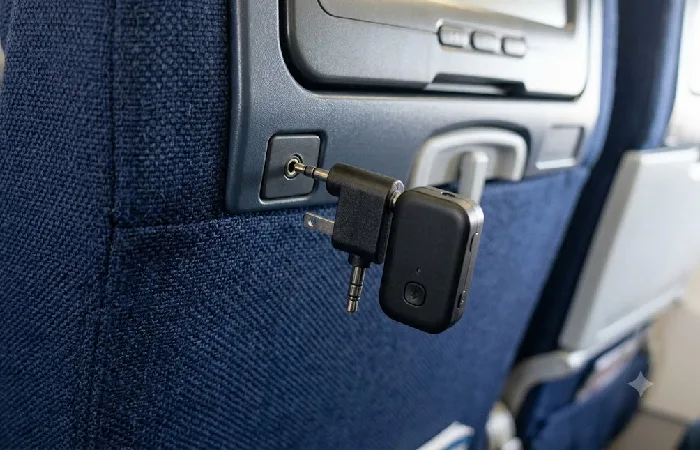
Here’s what the premium roundups skip. Your new Bluetooth headphones may not talk to the seatback screen at all.
Newer aircraft increasingly support Bluetooth in airplane mode, or they give you a standard 3.5mm jack. Plenty of planes still flying don’t. Some older business seats use a two-prong jack, and a few in-flight systems only output over a wire. If you want to watch the plane’s movies with your own headphones on those flights, you need one of two things. A tiny two-prong airplane adapter for wired pairs, or a Bluetooth transmitter that plugs into the jack and sends audio to your wireless set.
A basic two-prong airplane adapter runs about $8 to $12, and a compact Bluetooth transmitter for the jack runs closer to $20 to $30. Either fits in a jacket pocket, and it’s one of the cheaper items in our best travel gadgets roundup. Toss one in your bag before your next trip and the problem’s gone for years.
How to choose in five minutes
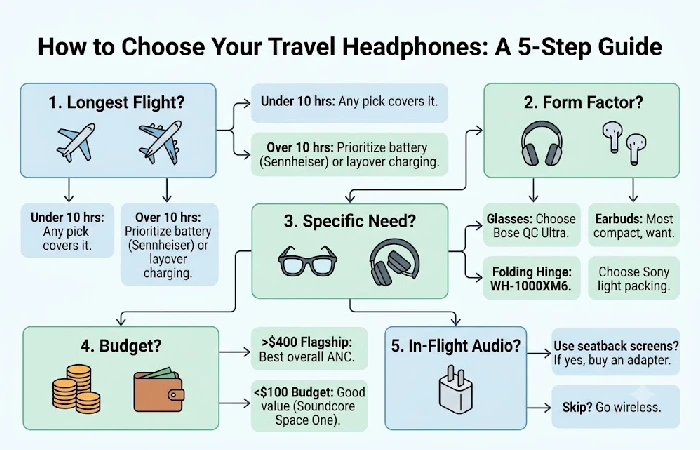
Start with your single longest flight this year. Under ten hours of transit and any pick here covers it. Over that, lean toward the Sennheiser for battery, or plan to charge on a layover. Decide over-ear or earbuds, since cold cabins and sleep favor over-ear while light packing favors buds. Set a ceiling: around forty thousand rupees buys a flagship, and nine thousand buys the Soundcore, which is genuinely good. If you’ll ever use the seatback screen, buy the adapter now, not at the gate.
FAQ
1. Need an airplane adapter for noise cancelling headphones?
Sometimes, depending on the plane. Newer aircraft usually support Bluetooth straight through the seatback screen. Older fleets still tend to have a 3.5mm jack, though, so a wireless headset connects fine either way most of the time. Older seats are the holdout, the ones still running a two-prong jack. Bring a cheap adapter for those, or a Bluetooth transmitter if going wireless matters to you. Pack one and you’re covered either way.
2. Noise cancellation actually earns its keep at 35,000 feet
Engine drone and air rushing past the fuselage make up most of what you’re hearing in a cabin, and that’s a low, steady frequency, the exact type active cancellation was designed to cut. Desk noise or train noise is messier and less consistent, so the difference is noticeable once you’re airborne. Announcements still cut through. So do sharp sounds, like a cart hitting a seat back. None of that means the tech is failing. It’s just not built to erase everything, only the constant hum sitting underneath it.
3. Are noise-cancelling travel headphones worth it?
For frequent flyers, easily. Quiet on a long flight means you land less drained, sleep better in the seat, and don’t push the volume to unsafe levels over engine noise. If you fly once a year, a budget pair like the Soundcore Space One makes more sense than a flagship.
4. Do you have to take them off for takeoff and landing?
Bluetooth has to be off, or the phone switched to airplane mode. That rule holds until the crew clears it. Some airlines are stricter about timing than others. Wait for the announcement rather than guessing.
5. Over-ear or earbuds for a long flight?
Over-ear, if sleep and comfort top your list. The seal is better and the battery lasts longer. Earbuds still make sense when you’re traveling light.
6. How much battery life do I need for a long-haul flight?
Match it to your transit time plus a buffer. Ten hours of flying plus layovers means you want a 30-hour rating or fast charging at a minimum. The sixty-hour Sennheiser removes the worry completely.
7. What are the actual drawbacks of noise cancelling headphones?
A few tradeoffs are worth knowing before you spend the money. You’ll pay more than a passive pair with similar sound quality. Battery life takes a hit too, since running ANC constantly drains power faster than plain music playback. And some models pick up a faint hiss once cancellation kicks in, or shift the low end slightly, which shows up more in a quiet passage than a busy one.
Where to go from here
The right pick is less about the best noise cancelling travel headphones in some absolute sense and more about the trip in front of you. Match the battery to your longest flight, the form factor to how you pack, the price to how often you fly. Then sort the adapter before you leave, not at the gate.
Once your ears are handled, the rest of your carry-on kit is the next call. That’s where our best travel gadgets guide picks up, from power banks that clear airport security fast to the chargers that keep everything alive across a layover.