Published: July 27, 2026
Last Updated: July 27, 2026
The kind of security system you need is one that communicates with your entire domicile. Not a separate alarm box bolted to a wall, but something that slams your door, mutes the lights, and brings your camera feed up the moment you utter leaving now. That, in a nutshell, is the main appeal of smart home security, and it’s here where many buying guides begin to leave murky waters.
Here‘s what‘s below: the difference between a smart and a dumb system, which systems to look for compatibility tests against before you make a purchase, whether to shell out for any cameras and doorbells, DIY or professional monitoring and if so, what system, what the real 2026 price ranges are, the hacking risk nobody talks about, and what happens when you‘re buying in India instead of in the US. Jump to whatever section answers your real question.
Quick answer: A smart home security system links the sensors, cameras, and lock in one common platform such as Alexa, Google Home, or HomeKit to automate the routines, not just give out the alarm. The price of equipment is usually between $150 and $500, with $15 to $30 in monitoring fees per month, but India’s 2026 STQC certification rules, which pushed Hikvision, Dahua, Xiaomi, and Realme out of the smart camera segment, still change the pricing and the shortlist of what’s actually legal to buy there.
Definition
A smart home security system is one where sensors, cameras, and locks connect to a shared platform rather than a central panel, automating routines like locking doors and adjusting lighting rather than just sounding an alarm.
What Actually Makes a Home Security System “Smart”
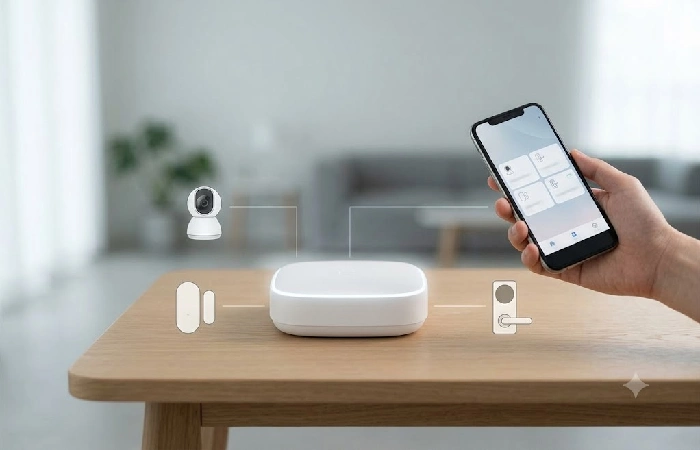
A smart home security system is one where sensors, cameras, and locks communicate to a common platform, not only to a central panel. That’s the one-sentence version. Everything else is detail.
The difference is important because a conventional alarm secures your home. An intelligent one secures and automates your home. Arm it and the heater drops two degrees. Ring the doorbell and the porch light dims and a live feed pulls up on your phone. None of that occurs if your alarm system is just a keypad.
Three things distinguish a smart label from a marketing label. First one, voice platform connection, Google Home/Alexa/Homekit, not a proprietary app no one else can interact with. Honestly the larger one is automation, one trigger leading to multiple actions, not one notification just sitting in your inbox. The devices actually communicating with each other, instead of each sensor living in its own singular bubble.
A device that merely fires off a notification on the event of a door opening is a connected device. Practical, yes. Smart, no. It isn’t any smarter than a post-it note until it acts on the event, not just reacts to it.
Traditional vs. Smart Security: What You’re Really Comparing
Traditional security systems simply ask: was someone in? Intelligent systems ask a whole set of questions: who is at the door, when the porch light goes on was it supposed to, is the thermostat merrily running away with our dollars in non-occupied mode and it answers all these questions over and over again all day long.
The tradeoff exists. Conventional systems are simpler to install and come with lower initial costs, period. Smarter systems require heavier reliance on your Wi-Fi and router, plus frankly your patience, that first weekend of setup, when nothing syncs up on the first time, and you’re rebooting the hub for the third time. Router goes down more than twice a month? Good to know before you go all-in.
Just as with the pricing, the way costs are shared is different as well. With a traditional system it really is mostly a one shot equipment purchase and then a flat fee for monitoring bingo. With a smarter system, you’re actually getting the smart stuff voice control, prescheduled routines hidden away behind a paid extras tier that you didn’t see written on the pricing page’s fine print. Read that fine print. Again and again.
Platform Compatibility: Alexa, Google Home, Apple HomeKit, and Matter
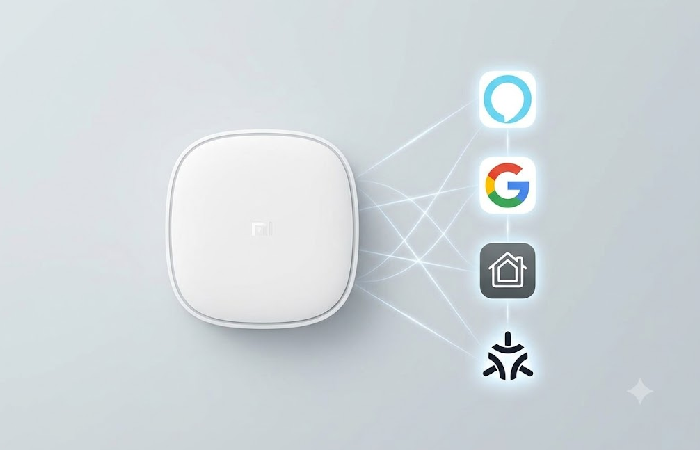
Buy the wrong fit for your ecosystem and you’ll spend two years fighting your own house. Verify this first.
Alexa has the largest device presence, so if your house already runs on Echo speakers, choose a system with native Alexa skills, not just voice integration. Google Home works best if your phone is Android and your devices are under the Nest brand, since Google hardware gets the earliest access to new integrated features. Apple HomeKit is the most restrictive of the three. Fewer security brands support it natively, but the ones that do process more data locally on your device rather than through a router or the cloud.
Matter is the wild card worth watching. It’s a connectivity standard backed by Apple, Google, Amazon, and Samsung to solve ecosystem lock-in, and adoption will ramp through 2026 as brands add support via firmware rather than new hardware. If you’re buying today, a Matter device is the safer long-term choice, even in an Alexa-only home, since it leaves a path out later.
In practice, this looks different across ecosystems. An Alexa household might say “Alexa, I’m leaving,” and the whole home locks up and shuts down together. A Google Home household issuing the same command routes it through Nest automation instead. HomeKit users get less voice-command spectacle but more consistent routines that fire silently in the background, which some prefer over announcing their nightly security routine out loud.
What to Actually Look For in Smart Security Cameras
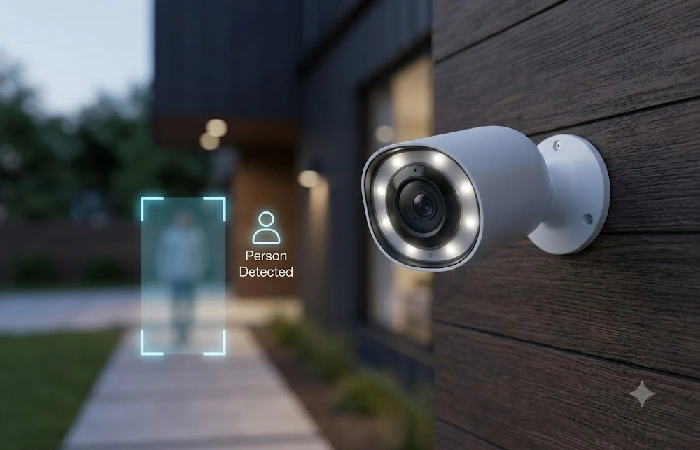
Resolution is not as crucial as most listings claim. 1080p is really the minimum to find a face at your front door. 4K is only really needed for zooming in on a distance shot, such as a driveway shot or street-facing camera rather than up close doorstep views.
The greater distinction is between person detection and generic motion detection. Generic motion alerts will go off for a moving tree branch as often as a person, which is precisely what causes people to turn off their camera notifications within a week of setup. Cameras with dedicated person, package, and vehicle detection reduce false alerts significantly, which is what makes this a system you actually look at versus one you have to have the discipline not to ignore.
Storage is the silent fee trap. Cloud storage plans go from a couple of dollars a month for a rolling 7 day history to well over for a 30-day history with multiple cameras. Local storage, typically an SD card or a drive inside the hub, avoids the recurring monthly fee, but means that footage is lost if the camera is ever stolen or destroyed. Consider the odds that will actually happen to your specific configuration before you commit.
Smart Doorbell Cameras: The One Device Worth Prioritizing First
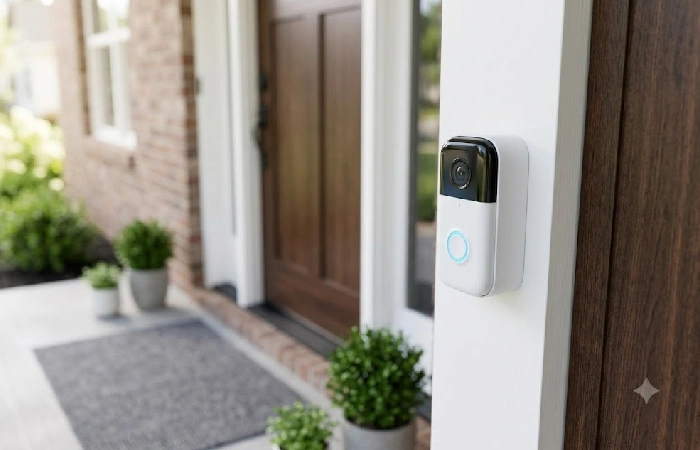
If your budget allows only one smart security device, the doorbell camera is the way to go. This will give you the most common entry point, and also two-way audio that would allow you to speak with a delivery person or intruder without actually revealing yourself.
Battery operated doorbells are do-it-yourself installs. That’s the big draw for DIY shoppers. You don’t need to call in the Electrician. The price to pay is the charging cycle. A busy front door with a lot of foot traffic every day will drain a battery operated doorbell in no time, while a “wired” doorbell that utilizes the existing chime wiring will never face this issue.
Check for pre-roll buffering, which records several seconds of video prior to the motion sensor firing. If this isn’t enabled, you’ll often discover that the moment people arrive, you’re already recording in mid-shot with the person standing at the door.
Smart Locks: The Piece Most Guides Treat as an Afterthought
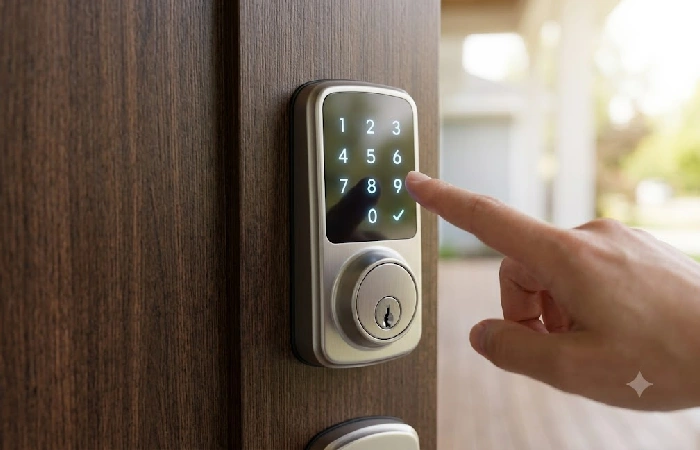
A smart lock isn’t a security system either, but it’s one item that integrates into the whole platform, and is often the one upgrade that transforms everyday life the most. No more messing around for the keys, no secret key left under the mat, and a complete record of precisely when it was locked and by whom.
Auto-lock on a timer is about the one thing worth actually prioritizing over bells-and-whistles like a fingerprint entry system. It automatically addresses the single largest human error in securing any home: walking out and leaving the door unlocked. Combined with a geofencing trigger, which auto-locks the door each time you leave the specified area with your phone, the concern over “was I smart enough to lock the door” ends.
Compatibility is more important in this step than at any other in this guide. If you get a lock that only communicates with its own app, that rather lets the entire automation chain you’ve been building toward down. Verify for that specifically before purchasing, rather than “smart home compatible” on the box, see the platforms by name.
DIY vs. Professional Monitoring: Which Setup Fits Your Home
DIY monitoring uses the alarm to you, and you respond to the alarm. Professionally monitored systems use a call center to receive the alarm, verify that it is genuine, and contact emergency services on your behalf if they do not receive a response from you.
DIY appeals to renters and first time buyers as there’s no long term contract, no installation fee and takes the equipment with you if you move. On the other hand the risk is yours alone. If your phone is on silent when you are burgled, then no one else is watching.
They may cost more each month, but professional monitoring narrows the sliding scale. It is worth it more if you’re traveling regularly, if you have an elderly parent living alone, or if you just don’t want to be the one making the call on the spot whether the blinking lights and dinging siren indicate an actual emergency or just a startled feline.
What Smart Security Systems Actually Cost in 2026 (and Why Estimates Vary So Much)
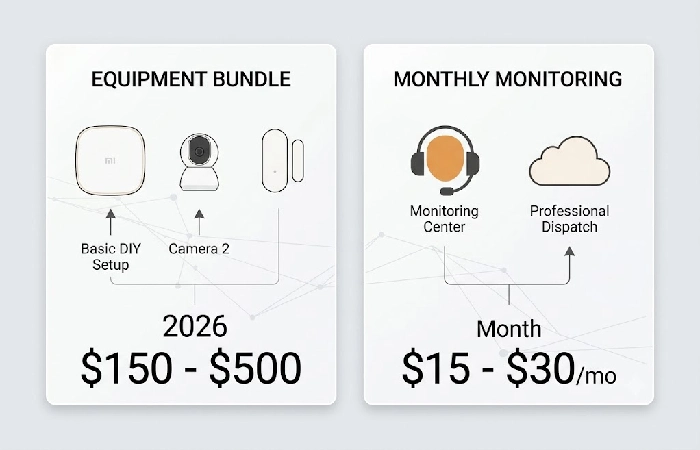
Anticipate three to be listed separately, equipment, monitoring, and the smart feature add-ons.
- Entry-level DIY equipment bundles: about $150 to $250 for a starter kit (sensors, hub, one camera)
- On the mid-range end (more sensor intensive systems or with a video doorbell), about $250-500.
- Monthly monitoring: $15 to $30 for regular professional monitoring (usually $10 to $20 extra to activate complete smart house automation)
- For self monitoring only, no professional dispatch: often free to under 10 dollars a month
If you’ve seen wildly different total market-size figures thrown around, that’s not a typo. Different research companies estimate the world smart home security market in 2025 to be somewhere between about $41 billion and nearly $88 billion, according to their definitions of “smart home security” and the regions included. Don’t believe in any one headline figure as gospel; the broad category is defined so differently that a direct comparison is usually actually comparing two different things.
The other expense variable to check prior to purchase is insurance which should be checked before but not after. Many home insurers now factor certified surveillance into claims eligibility, particularly in India following the 2026 STQC standards, where uncertified camera systems risk complicating a claim rather than helping one. This varies by insurer and region, though, so it’s worth asking about over the phone.
Are Smart Security Systems Actually Secure? The Hacking and Privacy Risk
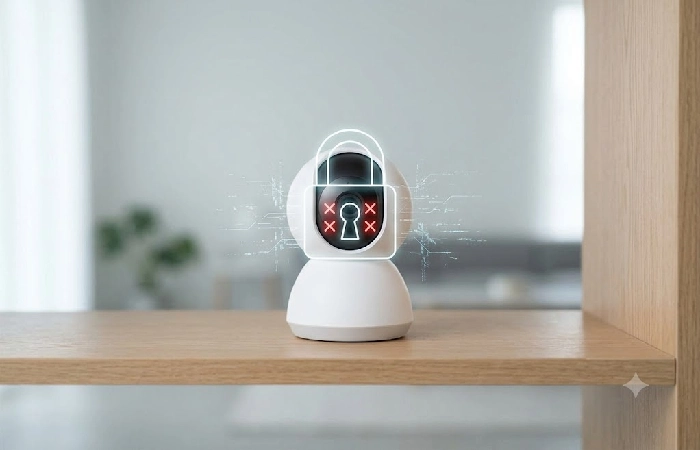
Most buying guides skip this in a sentence. Wrong move.
Each camera or sensor connected to your Wi-Fi is a possible attack vector not only for burglars, but for hackers. Bitdefender’s joint 2025 research with NETGEAR, based on telemetry originating in 6.1 million homes, reported 13.6 billion IoT-targeted attacks, a scale that makes clear this isn’t a hypothetical risk confined to enterprise networks. Security researchers consistently find consumer IoT devices, especially security cameras, among the most probed device categories on home networks.
Two practices reduce the real risk enormously. Turn on two-factor authentication for whichever camera account you use, and update firmware and not let the update reminders pile up for six months. Neither will win you any points for cool, but both will seal some of the most common leaks.
The second thing to consider is how data is handled. The usual cloud storage options maintain videos, arm/disarm times and sensor activity on a remote server so that data exists somewhere away from your house. Apple HomeKit compatible options tend to keep more of that information on-device for you to consider if privacy is more important than ease.
Smart Home Security in India: What’s Actually Available
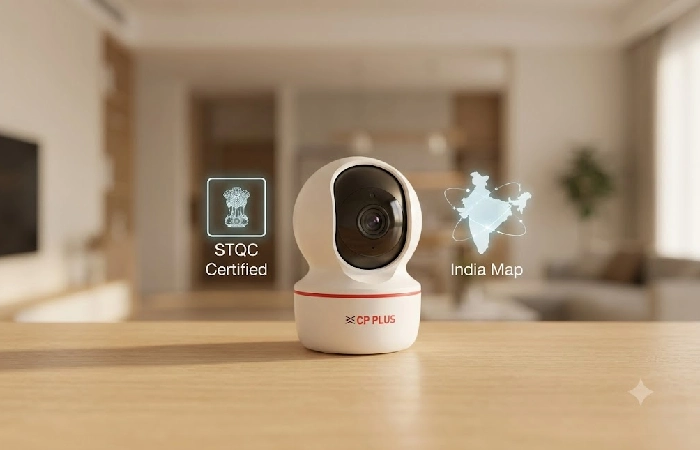
The majority of buying guides in English are made for, and for use in, the US market, and not necessarily relevant or applicable to what is actually sold and legal in India. That gap widened in 2026.
As of 1 April 2026, any internet capable CCTV camera sold in India must be an IS 13252-1-approved STQC-certified camera – and have a long list of security requirements. This was mandated by India Ministry of Electronics and Information Technology. Several Chinese-owned companies saw their cameras stopped from being marketed specifically Hikvision, Dahua, and TP-Link due largely to mounting concerns over Chinese-origin chipsets, and cameras that were vulnerable to remote access. Existing installed cameras will remain functional.
This change cannibalized the market rapidly. Many Indian and STQC-certified brands, CP Plus and Qubo most prominent, gained shelf space. As of mid-2026, the STQC portal had certified models from an estimated 7 vendors (in no particular order): CP Plus, Prama, Sparsh, Matrix, Honeywell, Vicon, and Equus. Certification applies per model, not per company, so verify the exact model. Entry-level CP Plus wireless cameras range between 2,300 and 4,700, depending on resolution and channel options. A complete four-camera setup with commissioning costs approximately 8,000 to 18,000 — a steep premium over pre-2026 pricing.
This is where most of the coverage fell through. Xiaomi and Realme, brands Indian consumers already trusted on handsets, entered the camera segment only to exit after failing the same certification, according to 91mobiles and SQ Magazine. An older “best smart camera” guide featuring Xiaomi is not just outdated but unpurchasable.
These models aren’t available through Indian shops and have no locally dispatched monitoring. If a US guide suggests either brand, that choice doesn’t apply here. The authentic starting point in the Indian market is CP Plus, Qubo, Prama, or Sparsh, with the model number verified on the STQC portal, plus a local installer, not a plug-and-play unit.
Building a DIY Smart Security Setup, Step by Step
- First choose your platform (Alexa, Google Home or HomeKit) then buy a device. This one will determine all the others.
- Let‘s begin with the doorbell. This is the most expensive device; there isn’t any need to drill holes in your interior walls.
- Don’t put entry sensors on all the windows on day one, put them on the two or three doors actually used all day.
- If your chosen gear requires a hub, connect one. More up-to-date cameras (for example) cut this stage out altogether.
- Try out one automation before throwing more devices into the mix. A straightforward “arm at 10 PM” routine indicates quickly whether the system truly is aligned with your household’s flow.
- Only upgrade after having lived with your base setup for two or three weeks. I have seen most buyers go far beyond what they actually need with sensors.
Common Mistakes That Undercut a Smart Security System
This is obviously the most expensive option, to buy every sensor in the house initially. Households generally discover that only the entrances that witness occupants actually entering the house require detecting sensors.
Automation setup takes a close third. If you’ve got a system where all it does is send alerts, without a single routine weaving items together, you’re not just wasting your money; you’re basically paying extra for a fancy, overpriced alarm.
There’s also the account security hole. Consumers are willing to spend hundreds of dollars on the hardware, but not willing to spend a second on good password security, and will use the same pre-leaked password on the account that controls it as on every other service they use. That’s where the real flaw is in the home IoT model.
FAQ
1. Do smart security systems work without internet?
Preset alarm functions (such as a siren being triggered on a sensor) would usually still work using the cellular backup if the system had one, but other such functions (like remote access to cameras or voice control) usually wouldn’t.
2. Is DIY installation actually reliable, or should I hire a professional?
For sensors and doorbells, DIY is really ok for almost all homes. Hardwired systems that involve electrical work or tricky multi-zone installations are where the installer helps justify the cost.
3. How much storage do I actually need for camera footage?
Seven days of rolling cloud storage is sufficient for most home users. The 30-day retention is more important when you’re attempting to establish an evidence timeline post-incident rather than real time alerts.
4. Can Chinese-brand cameras still be used in India after the 2026 restrictions?
Current installed devices remain in operation. What is prevented is new sales of internet-connected cameras from restricted brands which are not STQC-certified as of 1 April 2026.
5. Does a smart security system actually lower home insurance costs?
A few insurers will give small discounts for monitored systems; however this does vary from insurer to insurer, and from area to area. Therefore always check with your insurer.
6. What’s the real difference between a smart lock and a smart security system?
A smart lock is one device. The smart security system is the umbrella platform, cameras, sensors, surveillance, and algorithms that a smart lock can be integrated into if desired.