Published: July 21, 2026
Last Updated: August 31, 2026
Your phone’s built-in camera handles most shots fine. But try zooming into a bird 50 meters out, capturing the texture on a coin, or fitting a full room into a single frame. You hit a wall. Phone camera lens attachments close exactly those three gaps, and the price range runs from $15 clip-on kits to $130+ precision glass. The difference between those two ends matters more than most reviews let on.
This breaks down which lens types match your shooting style, which brands actually hold up, and where budget options genuinely compete with premium glass — part of our broader mobile accessories guide. Short on time? Skip to the budget tier picks below.
Quick Answer
Clip one onto your phone, or mount a case built for it — either way you’re suddenly shooting wide-angle, macro, telephoto, fisheye, none of which your built-in lens was ever going to give you. Nobody needs all four, honestly. A two-lens kit somewhere in the $20–$130 range closes the gap for nearly everyone. Figure out how you actually shoot first, then buy.
What Phone Camera Lens Attachments Actually Do
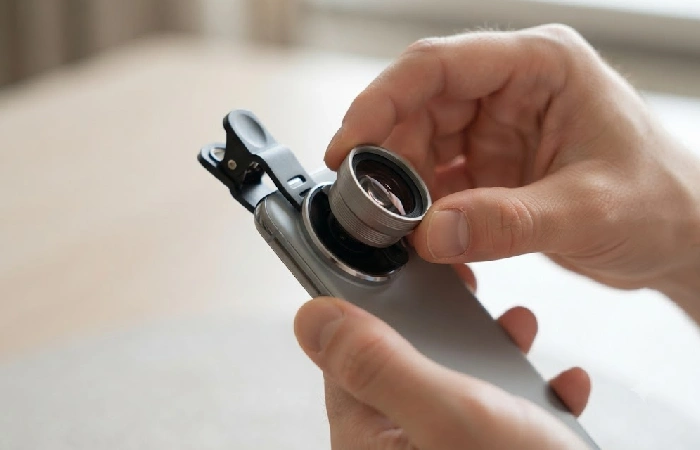
It’s a small piece of external glass, a clip-on or case-mounted attachment that sits over your phone’s sensor and unlocks wide-angle, macro, telephoto, or fisheye shots the stock lens array simply can’t produce. Moment, APEXEL, and Xenvo all make two-lens kits in that $20–$130 range, and for most people, one of those covers the gap completely.
Your phone has a fixed set of lenses. Computational photography does a lot with that hardware, but it can’t change physics. A 1x main sensor can’t optically zoom to 10x. It can’t focus on a subject 2 centimeters from the glass. And even the best ultra-wide built-in lens distorts edges more than a dedicated external wide-angle.
Dataintelo pegs the global market for these attachments at $2.1 billion in 2025, climbing at a 9.1% CAGR through 2034. The reason isn’t complicated. Smartphones now capture 92.5% of all photos taken, period, and more of those photographers are chasing results their stock hardware just wasn’t built to hit.
Which Lens Type Fits Your Shooting Style
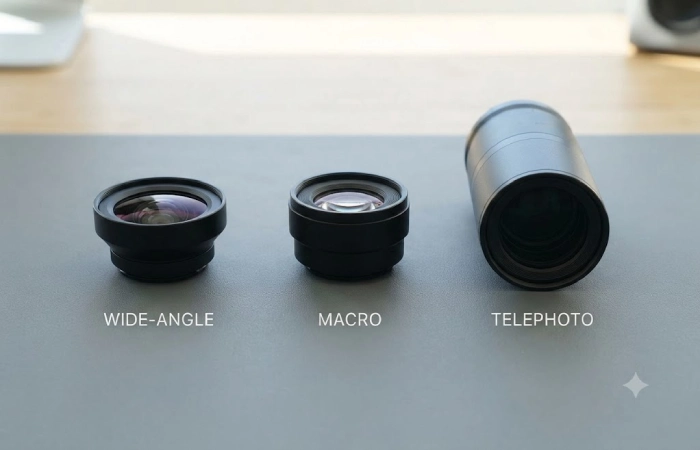
“10-in-1” lens kits sell on the promise that everything inside works equally well. It doesn’t. Every lens in there does one job, one job only, and how well it does that job comes down to the glass, period, not how many bonus pieces got tossed in the box to pad the listing.
Wide-Angle for Landscapes, Interiors, and Group Shots
18mm, 0.6x — that’s the typical wide-angle spec, and it’s pulling in 30 to 50% more scene than your phone’s main camera can manage on its own. More of the scene ends up in the frame without you stepping back.
This is the lens type most people should buy first — travel, real estate photos, group selfies, video calls where you want to show more of a room. Budget-wise, APEXEL and Xenvo clips land at $15 to $25 (₹1,000 to ₹1,800 in India). Moment’s 18mm goes for around $120, a different league entirely. It’s not readily available at Indian retail pricing, so Skyvik’s wide-angle (₹2,500 to ₹4,000) is the closer regional alternative. Shooting landscapes on the move?
Macro for Close-Up Detail
A macro lens for phone photography lets you focus on subjects 1 to 3 centimeters from the lens surface — product photography, food texture, insects, jewelry. That built-in “macro mode” most phones ship with? It’s running on a lower-resolution sensor, and the images come out noticeably softer than what dedicated glass produces.
Shooting product shots for a store or blog, where texture, stitching, or tiny components actually matter? A macro lens earns its price back fast. Budget picks from APEXEL and Xenvo come bundled with their wide-angle kits. Sandmarc’s dedicated macro runs $60 to $80 and produces sharper close-ups than the budget options at high magnification.
Telephoto for Distance Without Digital Zoom
Your phone’s 2x or 3x optical zoom gets you partway there. A telephoto lens for iPhone or Android pushes further, typically to 5x or 7x optical magnification, without the quality loss of digital zoom.
Telephoto attachments are bulkier. Alignment on the clip matters more because even slight misalignment shows as vignetting at higher magnification. APEXEL’s 36x telephoto ships with a mini tripod for exactly this reason — a steadier base cuts vignetting. Moment’s 58mm telephoto (about $120) is designed for portraits and moderate distance, not extreme zoom. Honestly, this is the one category where expectations need adjusting — a clip-on telephoto will never match a mirrorless camera’s 70-200mm lens, but for birding from a balcony or grabbing a clean candid from across a street, it does enough.
| Lens Type |
Best For |
Typical Price (US) |
Typical Price (India) |
Example Brands |
| Wide-Angle (18mm / 0.6x) |
Landscapes, interiors, group shots |
$15–$120 |
₹1,000–₹4,000 |
APEXEL, Xenvo, Moment, Skyvik |
| Macro (10x–15x) |
Product photos, food, insects |
$12–$80 |
₹800–₹5,000 |
APEXEL, Sandmarc, NEEWER |
| Telephoto (5x–7x) |
Wildlife, sports, candid portraits |
$25–$130 |
₹1,500–₹6,000+ |
APEXEL, Moment, NEEWER LS-41 |
Prices reflect brand and marketplace listings as of July 2026. Retailer pricing shifts often, so check current listings before buying.
Clip-On Kits vs. Case-Mount Systems
This is where the real decision sits. Most buying guides gloss over it.
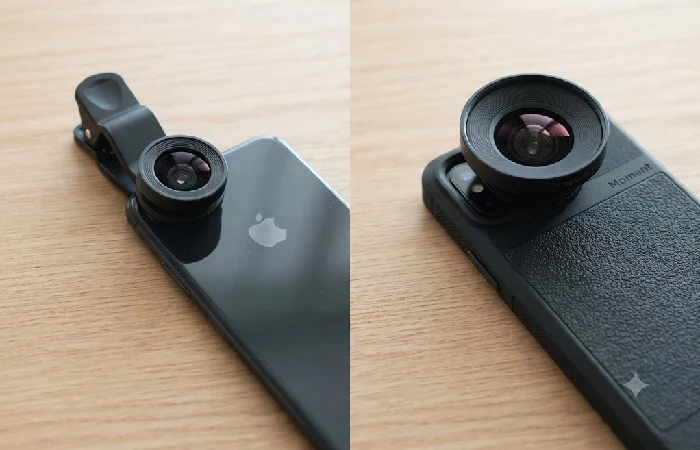
Clip-on kits use a spring-loaded clip that squeezes onto your phone, covering the camera lens. Universal, works across brands, costs less, and you can move it between phones. APEXEL, Xenvo, NEEWER, and Skyvik all use this system.
The trade-off is alignment. Modern phones pack 3 or 4 camera modules into a cluster, and a clip-on lens only covers one sensor — usually the main camera. When the phone’s software switches sensors mid-shot for a different zoom level, and the clip-on isn’t covering that sensor, you get artifacts or color shifts. For casual and mid-level shooting, though, this rarely surfaces unless you’re hitting the specific zoom levels that trigger the switch.
Case-mount systems — Moment is the main one — use a dedicated phone case with a bayonet or thread mount built in. The lens locks into a fixed position and doesn’t shift during shooting: better optical results, more stable for video. The cost is being locked into one brand’s case, which runs $30 to $40 on top of the lens price and needs replacing every time you upgrade phones.
Look, this is the part most people get wrong — they assume case-mount is always better. In terms of raw optical alignment, it is. But if you shoot casually, own multiple phones, or travel light, a good clip-on kit from NEEWER or APEXEL at $20 to $40 gives you 80% of the quality at 20% of the total cost.
Best Picks Across Three Budget Tiers
Under $30 / Under ₹2,000
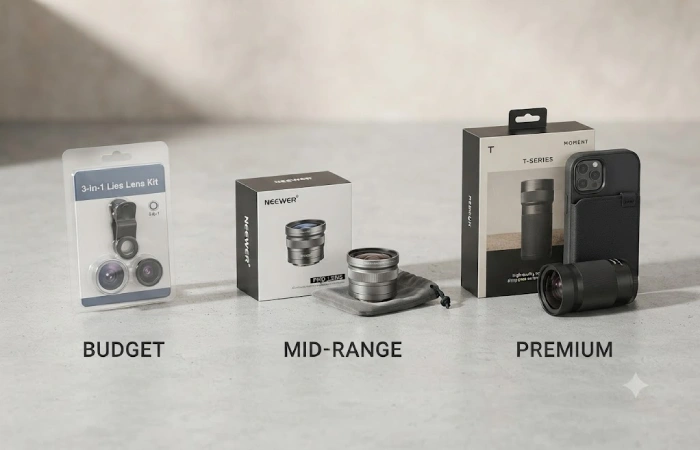
APEXEL’s 2-in-1 wide-angle and macro kit is the default recommendation here — about $18 to $22 on Amazon US, ₹1,200 to ₹1,500 on Amazon India or Flipkart. Decent glass for social media, stable clip for the main camera, ships with a carrying pouch.
Xenvo Pro Lens Kit is the other strong option at this tier, typically $22 to $28. It bundles wide-angle and macro with a slightly better build — an aluminum barrel instead of APEXEL’s plastic.
For India specifically, Adcom and generic kits on Flipkart start as low as ₹150 to ₹500. At that price, expect plastic optics with visible edge distortion — usable for casual Instagram stories, not much else.
$30 to $80 / ₹2,000 to ₹6,000
NEEWER’s LS-series Pro lenses sit in this range. You buy individual lenses (wide-angle, macro, telephoto) rather than a bundled kit, which means better glass per lens — their LS-26 Pro Macro runs about $45.
Skyvik targets the Indian market directly, with lenses in the ₹2,500 to ₹5,000 range, using multi-coated glass and a clip design built for phones with larger camera bumps. Sandmarc’s entry-level options also start here, especially for video-oriented shooting.
Over $80 / Over ₹6,000
Moment’s T-Series lenses, launched in 2023, remain the benchmark. The 18mm Wide runs $119.99, same price as the 58mm Telephoto, and the 10x Macro matches both at $119.99 — all three built for large-sensor phones like the iPhone 14 Pro and later, Pixel 7+, or Samsung S22+. Add a Moment case on top, $30 to $40, and that’s before the lens even ships.
Video creators chasing that cinematic widescreen look, flares and all, tend to land on Sandmarc’s anamorphic lens. Runs $100 to $120.
These premium options aren’t available at Indian retail pricing through standard channels. Import costs push the effective price to ₹12,000 to ₹18,000+, which is exactly why Skyvik fills the domestic gap.
Will It Actually Fit Your Phone?
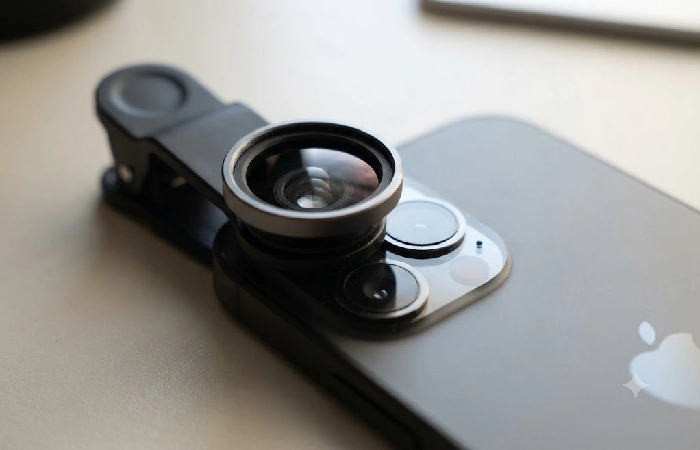
Before buying any phone camera lens attachment, run through this quick compatibility check:
- Check your phone’s camera module layout — count the lenses and note whether they sit in a horizontal line, vertical strip, triangle, or square cluster.
- Measure the camera bump. Phones like the iPhone 16 Pro Max and Samsung Galaxy S26 Ultra have raised camera islands, and some clip-on attachments can’t grip over the bump properly.
- If you’re using a clip-on, identify which sensor is your main camera — usually the largest one, or whichever the phone defaults to at 1x zoom.
- Test at multiple zoom levels after attaching. Pinch-zoom from 0.5x to 3x and watch for vignetting or color shifts.
- Test with your case on — some thick protective cases push clip-on attachments too far from the camera surface.
For case-mount systems like Moment, compatibility is binary: either they make a case for your phone model, or they don’t. Check the compatibility page on their site before buying the lens.
The Fisheye and Anamorphic Question
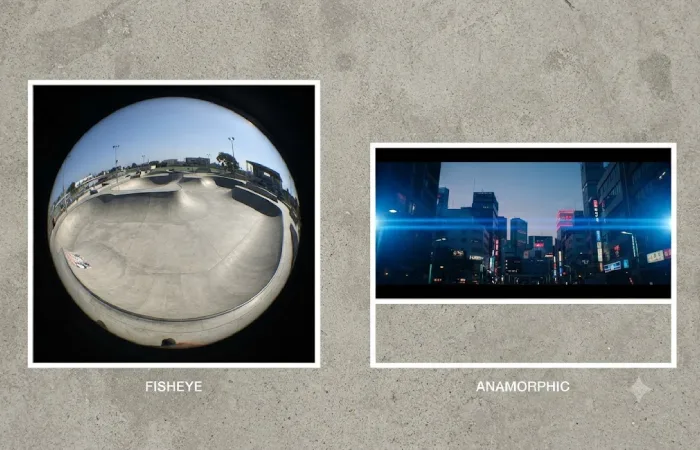
Clip on a fisheye and you get that dramatic, spherical 180-degree view instantly. Ten shots in, though, the novelty’s usually gone. Skateboarding footage, action sports POV, anything deliberately stylized — that’s where it actually earns a spot in your bag. Everything else, it’s a gimmick.
Anamorphic sits in its own category. You’re getting a wider aspect ratio, typically 2.39:1, plus horizontal flares that mimic actual cinema footage. Sandmarc and Moment both make dedicated versions, $100 to $130. Shooting short films or music videos on your phone? Worth it. Don’t already know what that look is — skip the lens. You won’t miss it.
Where Mobile Optics Are Heading
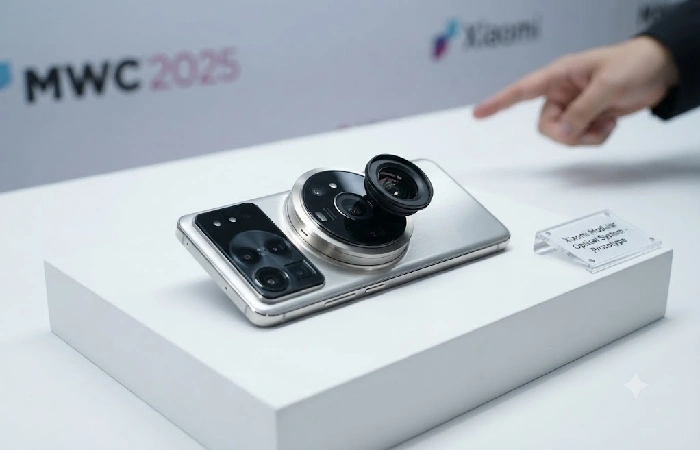
Xiaomi showed something interesting at MWC 2025 — a Modular Optical System, essentially a magnetic module that snaps onto the phone’s back and pairs a large Micro Four Thirds sensor with a fast prime lens. PetaPixel got hands-on with it. It’s just a prototype right now, but it points somewhere specific: manufacturer-built optics that could eventually push the clip-on third-party model aside entirely.
None of that changes what you do right now, though. Match the lens to how you shoot, settle on a budget you’re comfortable with, and check compatibility with your exact phone before you order.
Round Out Your Mobile Setup
A good lens is only half the setup. If you’re shooting one-handed a lot, a magnetic phone grip and stand makes a real difference — steadier hold, built-in kickstand for reviewing shots. Not a fan of the bulk? Our guide to popsocket alternatives covers slimmer options that still grip well. And if most of your shooting happens at a desk — product photos, video calls — a desk phone holder for calls frees up both hands and keeps the angle consistent shot to shot.
Frequently Asked Questions
1. Are phone camera lens attachments worth the money?
Depends on what you’re shooting. Landscapes, macro, anything needing real optical zoom — even a $20 attachment beats cropping or digital zoom, visibly.
2. Do clip-on lenses damage or scratch your phone camera?
They shouldn’t. The clip grips the phone body itself, not the camera glass, and rubber or silicone padding comes standard on most of them.
3. Which phone camera lens is best for landscape photography?
Wide-angle, and specifically 18mm or 0.6x. APEXEL or Xenvo if budget’s the priority. Moment’s 18mm if it isn’t.
4. Will a clip-on lens work with iPhone 16 Pro or Samsung Galaxy S26?
Physically, most universal clips will fit fine. Performance is another story — these phones run multi-camera modules, and a clip-on only covers one sensor at a time.
5. What’s the best budget phone lens kit under $30?
APEXEL’s 2-in-1 runs $18 to $22. Xenvo’s Pro Lens Kit costs a bit more, $22 to $28, if you want the step up.
6. What’s the difference between a macro lens and a telephoto lens for phones?
Macro gets close, 1 to 3 centimeters from tiny subjects. Telephoto does the opposite — it reaches out, 5x to 7x optical zoom on things far away.
7. Do phone lens attachments reduce photo quality?
Depends on the glass and alignment. Budget plastic lenses show edge softness and chromatic aberration; quality glass options like Moment, Sandmarc, and NEEWER Pro maintain sharpness within their focal range.