This guide includes product recommendations. No brand pays for placement here. A few links are affiliate ones, though — free to you, small cut to us.
You just spent $1,000 on a phone. Now you’re scrolling 40,000 near-identical Amazon listings, and somehow every one claims “military-grade drop protection.
Here’s what most buying guides won’t say out loud: that label means almost nothing. A manufacturer can print “MIL-STD” on the box without ever running the test. What actually protects your phone is cheaper, simpler, and a lot less flashy.
Quick take: a slim TPU case with raised edges and MagSafe, in the $25–$35 range, is right for most people. Heavy droppers should go rugged. And plant-based cases have closed the gap — they now hold up close to conventional ones for anyone who cares about the footprint.
How to Pick a Phone Case Without Falling for Marketing Hype
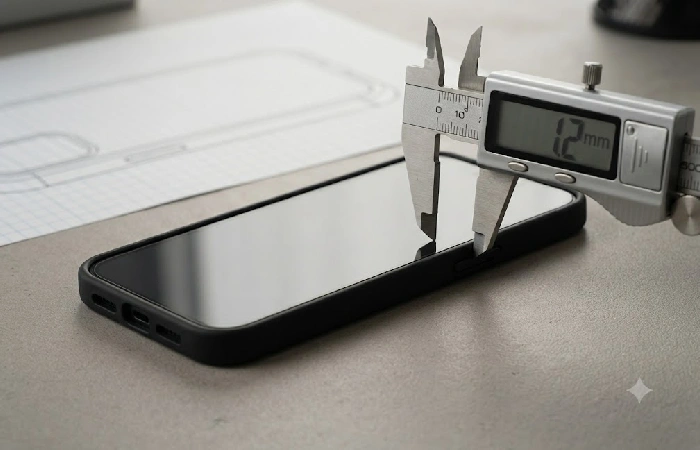
A case is really just a shell that eats impact force so your phone’s glass doesn’t have to. That’s it. Reduce repair bills, stretch the phone’s life — nothing more mysterious going on.
What you actually use your phone for should decide this, not the packaging. Drop it constantly? Go rugged. Care about sustainability? Plant-based options aren’t the compromise they used to be. Everyone else: slim case, raised edges, MagSafe, done.
Grand View Research has tracked 8.6% annual growth in case demand through 2033 — and that’s not surprising once you look at why phones need protecting more than ever. Glass backs. Multi-camera arrays. Curved OLED screens that crack if you look at them wrong. Market Reports World puts the number at 82% of smartphone owners now buying some kind of protective accessory.
More listings doesn’t mean better choices, though. The category is full of knockoffs riding on inflated claims. Otter Products — the company behind OtterBox — puts it plainly: buy direct from the maker’s site or wherever you bought the phone. Anywhere else, you’re rolling dice.
The “Military-Grade” Myth
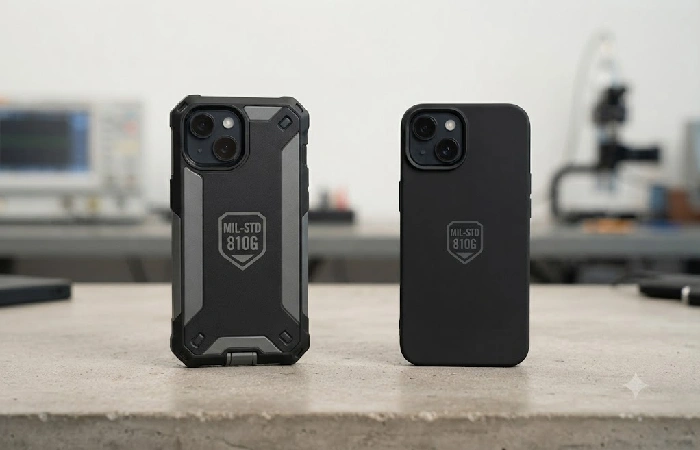
Michael Crider, a journalist who investigated the topic for ReviewGeek, has said military-grade as a measure of toughness is shaky at best — the term generally points to the MIL-STD 810G series of certifications, but that standard covers so much ground it’s nearly meaningless as a label, according to Consumer Reports’ reporting on the claim. And here’s the part that actually matters: nothing requires a manufacturer to run those tests themselves before printing the label on the box. According to BGR’s breakdown of the standard, the drop tests aren’t administered by anyone military-affiliated at all — companies self-test, or don’t test at all, and the label goes on regardless.
So what does protect your phone? Raised edges around the screen, at least 1mm above the glass. Raised edges around the camera housing too, which most guides skip. Padded corners with air gaps. A fit snug enough that the phone can’t shift on impact. And TPU or a hybrid build, not pure hard plastic, which just transfers force straight through to the glass.
Speck’s Bryan Hynecek, who leads design there, makes a point worth sitting with: a slim case can match a bulky one, provided it’s snug. The OtterBox Symmetry backs this up in practice — $22, thin, and it’s carried phones through years of drops.
This is the part most people get wrong. Bulk isn’t protection. Fit is.
The 5 Types of Phone Cases Worth Buying in 2026
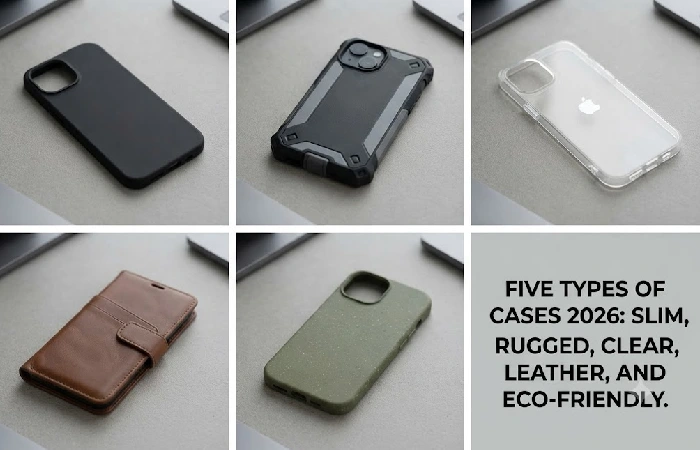
Slim Everyday Cases
Built for people who want protection minus the bulk — 1–2mm added thickness, covered corners, a raised lip on screen and camera. TPU or a TPU-polycarbonate hybrid absorbs shock better than hard plastic ever will.
The ESR Cloud Soft Magnetic ($30) doesn’t excel anywhere specifically. It’s just solid everywhere — slim, soft-touch, MagSafe that actually holds. Spigen’s Nano Pop ($15) covers the basics for less, though the back shows smudges fast. That’s the trade you’re making at that price.
Rugged and Shockproof Cases
Outdoor work, kids, or you just drop your phone a lot — this is your lane. Real protection here comes from layering: a soft inner shell absorbing impact, a hard outer shell dispersing it. Air-gap padding at the corners handles the rest.
The OtterBox Commuter Series ($50) has earned its recommendation the hard way — durable shell, shock-absorbing inner layer, meets actual military drop-test standards when tested (not just labeled), and covers the charging port. Not cheap. But it beats bulkier rivals on everyday usability.
A YouTuber who drop-tested more than 50 iPhone 17 cases ranked the Flolab Surtect #1 for corner drops at 3, 4, and 5 feet. Triple-layer build, TPE running the entire edge. Old-school looking case. The data doesn’t care.
Clear Cases With Grip
People buy clear cases to show off the phone underneath — fair enough. The catch: most yellow within 6 to 12 months from UV and hand oils. If clear matters to you, look specifically for anti-yellowing coatings or polycarbonate backs, not pure TPU.
Zagg’s Crystal Palace Snap With Stand ($35) holds its clarity longer than standard TPU and throws in a working kickstand. Budget-conscious? The ESR Clear Magnetic case (under $20) covers the basics with MagSafe — just plan on replacing it within a year once it starts to yellow.
Leather Wallet Phone Cases
One case, phone and cards together. The catch nobody mentions upfront: most block wireless charging and MagSafe entirely. If you use Apple Pay daily, that’s a real cost.
Nomad’s Modern Leather Case uses vegetable-tanned Horween leather over a polycarbonate frame — clicky buttons, a dedicated Camera Control button, and full MagSafe compatibility despite the leather. $60–$70, premium pricing to match. Burton Goods’ Heritage case gets you full-grain leather and a microfiber interior with MagSafe built in for around $45.
Ask yourself honestly: do you need cards in the case? If not, a slim case plus a separate MagSafe wallet gives you more flexibility.
Eco-Friendly Biodegradable Phone Cases
The eco-friendly case market is estimated to have been worth around $1.2 billion in 2025, with projections putting it near $2.3 billion by 2034 (Market Reports World). Recycled plastics hold the largest share at 35.2%, biodegradable plastics at 28.5%, plant-based materials at 22.1%. Roughly 31% of manufacturers introduced eco-friendly designs between 2023 and 2025 — niche is becoming mainstream fast.
Pela leads the segment with plant-based biopolymer builds. They’re not the most durable-feeling — edges could be more raised, buttons run stiff — but they’ve added MagSafe now, across dozens of designs. Their Wave MagSafe Case uses wheat straw, is genuinely biodegradable, and kicks proceeds to environmental charities like 1% for the Planet.
Honest trade-off: expect to pay 25–50% more than conventional cases, and possibly get a shorter lifespan. The protection gap has narrowed enough, though, that if sustainability matters to you, it’s a real option now — not a compromise.
What You Actually Get at $15, $30, and $50+
| Price Tier |
What You Get |
Best For |
| $15–$20 |
Basic TPU/polycarbonate, standard protection, no or weak MagSafe |
Budget buyers, frequent upgraders |
| $25–$35 |
Better materials, reliable MagSafe, anti-yellowing options |
Most people — the sweet spot |
| $50+ |
Multi-layer, premium materials, brand warranty, tested protection |
Heavy users, 3+ year phone owners |
Consumer Reports tested cases independently and found most of their recommended picks cost $30 or less — price and performance just don’t track together the way marketing suggests. Fit decides it, not the sticker.
In India, Flipkart and Amazon India run a similar tier structure: ₹800–₹1,200 basic, ₹1,500–₹2,500 mid-range with MagSafe, ₹3,000+ for premium rugged or leather. Spigen, Kapaver, and Ringke are all easy to find there.
iPhone 17 vs Samsung Galaxy S26: The Availability Gap
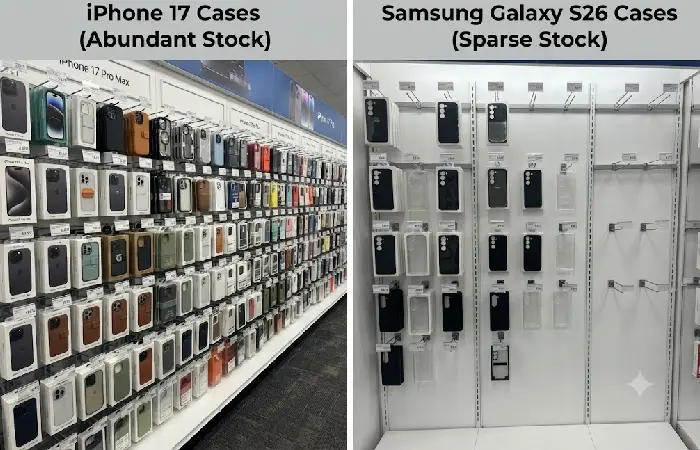
Here’s what most guides skip: Samsung owners have fewer real options. Case makers design for iPhone first, then port to Android as an afterthought. Spigen, ESR, and OtterBox all make Galaxy cases — the MagSafe-equivalent variety and polish still lag, though.
The Galaxy S26 ships with HaloLock-compatible cases from ESR, bringing magnetic charging to Android in a real way. It’s just not as mature an ecosystem yet. Android users are better off sticking to brands with dedicated Samsung lines rather than gambling on generic “universal” claims.
iPhone 17 owners have the opposite problem — too much choice. Filter for cases that specifically confirm iPhone 17 camera-cutout compatibility; the Camera Control button needs precise alignment or it just won’t work right.
When to Replace Your Case (and Signs You’re Fine)
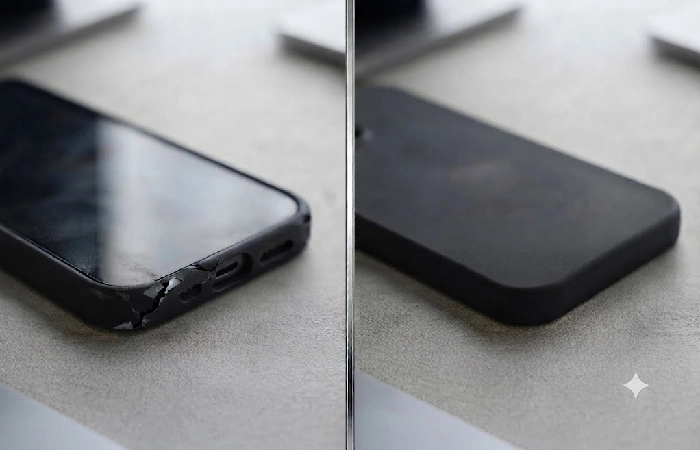
Time for a new one if the corners are cracked or compressed, the fit’s gone loose, a clear case has visibly yellowed, buttons feel mushy, or MagSafe magnets have gone weak enough that things slip off.
You’re fine if the case still fits snugly, corners are intact, there’s no visible material fatigue, and charging still works reliably.
Most cases last 12–24 months under normal use. Rugged ones often go longer. Clear TPU tends to need replacing within a year, yellowing being what it is.
Once your case is sorted, our best mobile accessories guide rounds out chargers, screen protectors, and the rest of your setup.
FAQ
1. What is the best phone case type for maximum protection?
Rugged multi-layer cases with reinforced corners, backed by actual drop-test data rather than a “military-grade” sticker. The OtterBox Commuter and Flolab Surtect both have verified results.
2. Do expensive phone cases actually work better?
Not really, no. Consumer Reports’ top picks mostly ran $30 or under. Fit, material, and construction decide the outcome — a $15 Spigen with proper TPU can beat a $60 case coasting on marketing.
3. Are clear phone cases good, or do they all turn yellow eventually?
Most clear TPU yellows within 6–12 months, full stop. Polycarbonate-backed versions resist it better but give up some shock absorption in the trade. Budget for a yearly swap, or pay more upfront for anti-yellowing coatings.
4. Are biodegradable phone cases durable enough for daily use?
For normal use, yes — plant-based and biodegradable plastics now match conventional TPU on everyday drops. Extreme conditions are still a stretch. Most people won’t notice the difference.
5. How much should a reasonable phone case cost?
$25–$35 covers reliable MagSafe and decent materials for most people. Below $15, quality gets inconsistent fast. Above $50, you’re largely paying for premium materials or the name on the box.
6. Are good cases harder to find for Samsung phones?
Yes, honestly. The ecosystem still favors iPhone. Stick to brands running dedicated Galaxy lines — Spigen, ESR, OtterBox — and skip the generic “universal” labels. HaloLock is closing the MagSafe gap, but accessory variety hasn’t caught up yet.
7. When should I replace my phone case?
Every 12–24 months as a baseline, sooner if corners crack, the fit loosens, or a clear case yellows. If it still fits snugly and the corners are intact, there’s no rush.
Bottom line: military-grade labels don’t mean much on their own, so skip the marketing and check for raised edges, a snug fit, and real drop-test data instead. Get those three right and a $22 case protects your phone just as well as a $100 one — sometimes better.