Published: July 26, 2026
Last Updated: July 26, 2026
Crumbs caught between the seat track. A coffee mug that seems sticky for no particular reason. Some sand from a three week old beach trip never did get removed, but a cheap portable car vacuum took care of everything in 10 minutes flat, and choosing the right model is more about matching the power source and type of suction to the actual physical makeup of the mess than going for the largest number right there on the box.
Begin here, or if you are already versed in your circumstances, jump to the picks below: for the average driver, a corded 12V unit such as the ThisWorx Car Vacuum Cleaner (~$21.99-30 depending on the seller) is probably the best choice. 106 watts, a 16-foot cord, and a washable HEPA filter. For those who can do away with the 12V outlet, a cordless unit in the $80-$150 range can offer a limited but useful amount of runtime on the go.
Quick answer: The two most popular types of portable car vacuum cleaners are the corded 12V, which has an indefinite runtime due to the fact that it is connected directly to your car’s outlet, and cordless battery powered which has a limited runtime but unhindered mobility. A fifteen dollar or less corded car vacuum is sufficient for a weekly clean-up of the vehicle unless you are a pet owner or need to clean up large messes.
Definition
A portable car vacuum cleaner is a small handheld vacuum made for a car’s small compartments by means of a 12 V corded engine or a rechargeable battery to draw out debris, such as dust, crumbs, and cat or dog hair, from seats, floor mats, and cup holders.
What a Portable Car Vacuum Cleaner Actually Solves
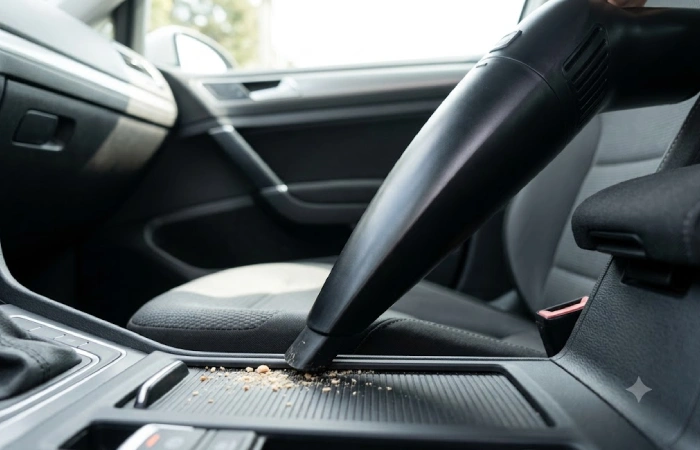
Cleaning car interiors is a bizarre art in itself. Tight seat crevices, cavernous floor wells, cupholders, fabric that refuses to comply with any of the above being sucked by household vacuum hose and wand for most of eternity. That’s actually why this category of vacuum exists, not just marketing. Corded 12V units are plugged into the car’s lighter socket and virtually never run out of juice. Cordless units sacrifice this for locational freedom, and for many, location wins.
And here’s where it varies how important this is. Aston University’s College of Health and Life Sciences states that the average for bacteria on toilet seats was overall lower than in car interiors. The overall average for car interiors was about 1,425 in the trunk and around 649 on the driver’s seat. That’s not and beyond spot statistic used in a catchy introduction. That’s this and how to make it a monthly routine rather than an occasional presence.
Corded vs. Cordless: Picking the Right Power Source
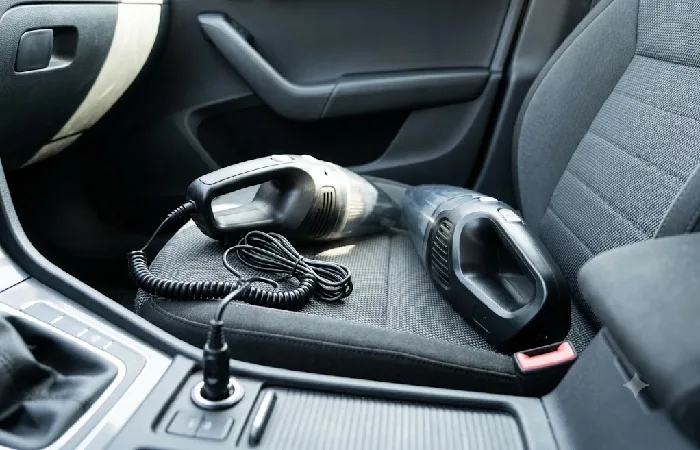
Corded models are literally unplug-it-and-go. Until the engine dies or the battery runs out. The only problem is reach. You’re constricted by the cord’s length, and 16 feet is a dash from the mud flaps, hardly enough to do an entire sedan row-to-row without breaks.
Cordless runs for anywhere from 15-50 minutes depending on the unit. The Dyson Car+Boat boasts of 50 minutes of run time in Normal mode. 15 or 20 minutes of Boost mode will provide an aggressive cleaning run time if a thorough detail is on the agenda rather than a quick Fluff & Tuck over the front seats.
Rechargeable via USB-C models are the newer middle ground. Can use a phone charging cable, a power bank, or plug into the car’s USB-C port. No proprietary anything. No searching for the one cable that works.
Suction Specs Decoded: Watts vs. Pa vs. Air Watts
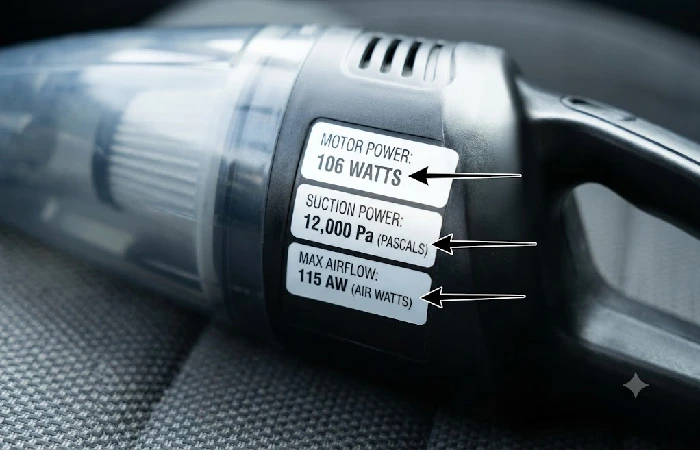
Most buying guides get to this point and go fuzzy on the detail, and time to be frank why. Motor wattage is the measure of how much power is consumed by a motor. Not the measure of how much of that turns into real suction. Two separate measurements, yet always the same.
Pascal ratings are measured as a static pressure (airflow is blocked entirely). While they’re more representative of lab evaluations than realistic cleaning, they’re still just a best-case number. CFM and Air Watts combine a spec for pressure with a spec for airflow. When a company chooses to list either one of those figures, that’s a more candid number. The Dyson’s specs of 115AW and the Craftsman V20’s 45 CFM are more than the blank 20,000Pa number that is provided by the company that refuses to disclose airflow.
This is the spec that no one verifies, and most round-ups pass over because breaking it down into apples-to-apples comparison involves more than a cursory reading of a list: A 20,000Pa vacuum with poor airflow design can indeed be trumped by a 12,000Pa machine with more air suction. When Pa is the only figure available, use it as an indication, not an absolute.
Attachments and Filters That Actually Matter
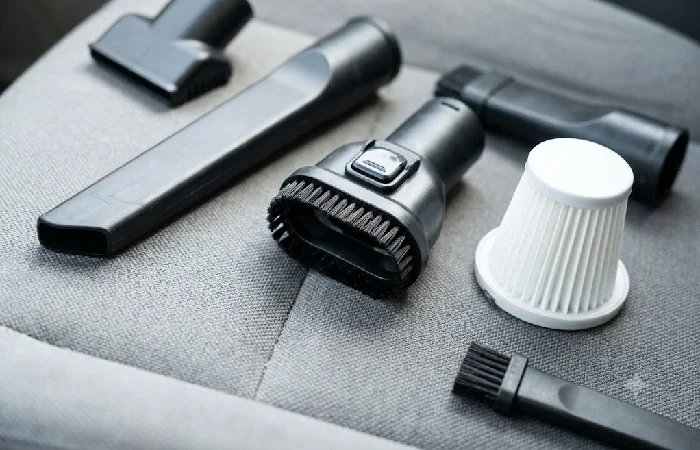
Crevice tool. Must not do without. Reaches into seat track gaps, passes a wide nozzle that can never get to between a child seat and the side of the car, between door pockets and everything else.
The type of filter actually is more important than people think. A washable HEPA filter catches fine dust and allergens; the EPA explains HEPA filtration as “removing 99.97+% of dust, pollen, mold, bacteria and any airborne particles with a size of 0.3 microns.“A foam filter designed for larger debris but does not trap that fine dust and contaminants to be re-entrained back into cabin air. Well worth paying a bit extra for if anyone who regularly journeys in the car has allergies or asthma, and it fits seamlessly into a large overview of useful car gadgets worth keeping in the car if the interior is receiving a thorough upgrade.
Motorized brush attachments distinguish a good pet-hair vacuum from an excellent one. Suction is too weak to perform well on hair trapped in the soft weave of upholstery or carpeting. A motorized brush penetrates the fibers and breaks the hair loose so it can be sucked away.
Wet/Dry Capability: Do You Need It
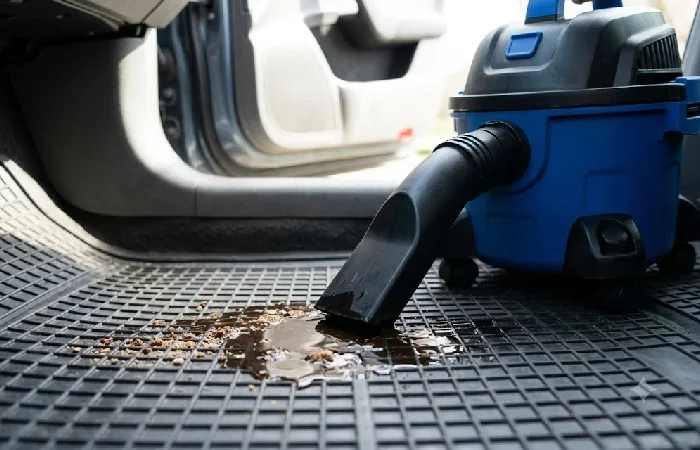
If liquid messes are a (serious) possibility, then kids, pets, and a chronic coffee drinker in denial should confirm wet/dry capability before buying anything. A dry only vacuum sucking up a spilled drink can trash the motor completely. Units like the Armor All AA255 (shop-vac style) might be able to go after both spilled liquid and heavy dry debris, but a 120V outlet is a requirement. Out of the question in parking lots and roadside cleaning jobs.
Why Your Car Is Dirtier Than You Think (and How Often to Actually Vacuum It)
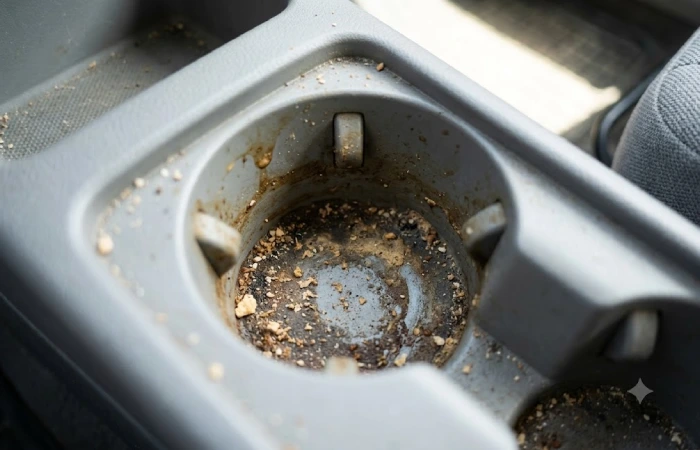
That Aston University one doesn’t just look good. It’s also a maintenance routine. A monthly full-vacuum, augmented by a quick weekly run through cup holders, the console and door pockets prevents bacteria from proliferating, as the aforementioned research found. Crumbs and bits of food give bacteria plenty of nutrients to grow on; a vacuum session does more than glossy wipe-downs here.
Best Picks by Situation

For weekly maintenance on a budget, the ThisWorx (about $21.99–$30) is nearly always the recommended choice across nearly every currently ranking guide, and that consensus is earned. 106W of cyclonic suction, a 16-foot cord, a washable HEPA filter. Handles most non-pet, non-heavy debris situations without much drama.
For pet owners fighting embedded fur, the Shark UltraCyclone Pet Pro Plus, about $99.99, wins. The dual cyclonic suction maintains the suction as the filter becomes clogged with fur, which single-cyclone competitors can not boast once the bin grows crowded. The Bissell Pet Hair Eraser at $89.99 employs an entirely different tactic, a motorized brush that physically pulls hair out of tightly woven fabric rather than depending on the suction, and on short-haired dog hair woven into seat covers that brush has a definite advantage.
Want the ceiling on performance? Want to pay for it? Dropping down here at $299.99, we have the Dyson Car+Boat. 115 Air Watts and up to 50 minutes of run time. A Mini Motorized Tool designed specially for embedded upholstery mess that most other attachments in this category can’t even hope to match. More than you need for a once-weekly commuter clean. Not enough for two big dogs and a quarterly deeper clean.
Heavy debris (those in the sand-gravel-dried-mud, not crumbs group) requires a tool with real air flow volume. The Craftsman V20, $46 (bare tool, battery not included if you’re not already in that system) pumps out at a whopping 45 CFM, which can disperse debris that the lower powered handhelds simply blow around the carpet. Armor All AA255 Wet/Dry Shopvac, ~$71.99, handles the sandy, gravelly, dried mud debris area, but with the added benefit that it requires a wall electrical outlet.
Shopping Outside the US? What Changes for Indian Buyers
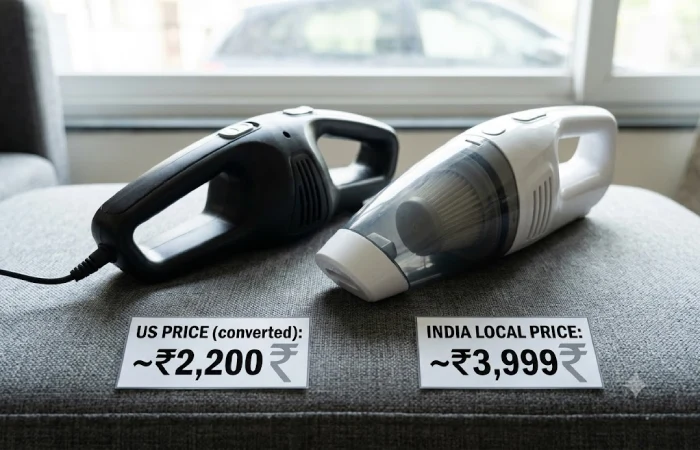
All the guides that rank for this keyword today are based on the US Amazon customer. None of them realize this search has actual volume in other places, including India. Worthless if you are pricing in rupees and all the comparisons on the page are dollar-only.
Here’s that sincere caveat instead of the one fabricated: they’re already in US retail and simply made into a currency conversion (about 1,800–2,500 for a ThisWorx-equivalent at standard mid-2026 rates) isn’t exactly the same as confirmed availability, actual local pricing, which varies depending on import duty and what is locally stocked. The more appropriate action to take here is simply to look directly at the item on Amazon.in or the live listing of a local store; don’t assume a US price.
Frequently Asked Questions
1. Do portable car vacuums work as well as full-size vacuums?
Not really for deep carpet work, but that was never part of the assignment. In the case of the better cordless models, the Dyson or the Shark’s cyclonic line in particular do just fine against dedicated handhelds used in the home.
Wattage does not tell the entire story either. It is not hard at all for a properly designed 100W motor to outperform a poorly designed 150W motor because the wattage is an indication of power draw, not efficiency and those two tend to be lumped together when shopping.
2. Can I use a car vacuum for other spaces?
Cordless, no problem. Upstairs, in the closet, on the boat if it applies. But corded 12V models are confined to spaces with a compatible outlet nearby.
3. How long do these vacuums typically last?
Between 2 and 4 years with regular filter cleaning before suction drops significantly. Cordless batteries usually die before the vacuum motor does.
4. How often should you actually vacuum your car?
Monthly for a full pass. Weekly for the high touch points, cup holders, console, the places hands and food actually land, based on the bacterial build up patterns Aston University laid out rather than an estimation of what“regularly” should be.
5. What’s the real difference between corded and cordless?
Corded refers to an electric cord which provides unlimited working time but limits your distance from the power outlet. The term cordless refers to complete portability for some varied length of time usually between 15 and 50 minutes per charge, depending on the model and how much it is operated.
6. Are HEPA filters worth the extra cost?
Yes, but only for allergy-sensitive households, as foam filters push the fine particulate straight back into the cabin air.
Matching the Vacuum to How the Car Actually Gets Dirty
The real question was never which vacuum had the largest number stamped on the box. It’s which power source & attachments set really fits the way the car is driven, week in/out. A commuter car that sometimes gets a hand-me-down coffee spill, or a truck bed that frequently hauls construction debris, and the back seat that releases a constant furry avalanche of dogs are big differences from which vacuum is actually used. Pick the one that fits from the beginning, and those spec sheets aren’t so significant.