Quick take: Best all-rounder car dash cam 2026: the Viofo A229 Pro; best budget car dash cam 2026: the Viofo A119 Mini 2; best car dash cam 2026 for parking mode: the Thinkware U3000 Pro. Sensor quality, not resolution, is what actually separates usable footage from a blurry clip nobody can act on.
Definition: “A car dash cam is a small, windshield-mounted camera that constantly records the road, stores the footage on a memory card/SSD, and protects crash-adjacent sections of film so they are not erased when the card overwrites everything else.”
What actually matters before you look at a single model
A dash cam for cars is the tiny recording device attached to the windshield that records the road while in operation, saves video to a memory card or solid state drive and automatically “locks” crash related video so that it isn‘t overwritten when the card fills up. Drivers have them for insurance claim disputes, to record break-ins and to prove fault.
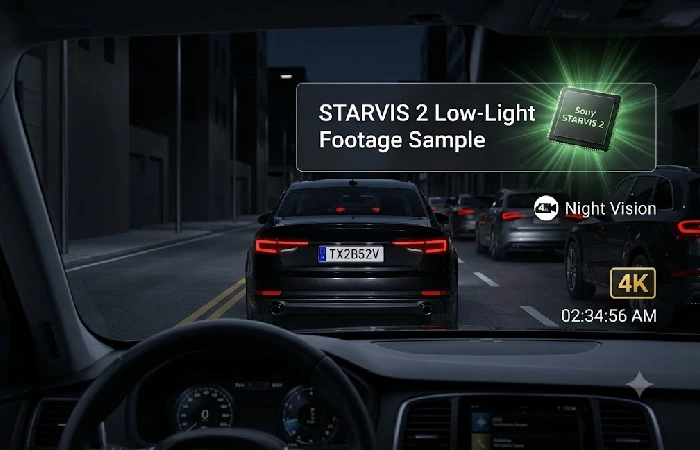
Sensor quality wins resolutions nearly all the time. Viofo and 70mai both ship cameras with the same Sony STARVIS 2 sensor. That‘s exactly what makes those cameras hold the details in the dark while a cheaper ’4K’ camera causes the footage to turn into a confused wash. A camera with a leading camera sensor number but a less capable chip behind it will still lose in the dark. That‘s not a marketing note, it‘s the biggest quality limitation in this whole category today.
GPS matters more than people expect, too. They overlay speed and any location information on the video, which is the part that makes the video a piece of evidence that lets an insurance adjuster or a judge decide something rather than a piece of evidence that makes the other driver look bad without really saying anything.
The storage format determines how much hell you will give the thing. MicroSDs fail. It‘s not an if but a when, especially in cameras that have to write/read over and over again all the time, stuck in stop-and-go traffic. Few high-end ones like Viofo A329 have the option of external SSD drive (check out Viofo‘s spec page for maximum capacity, as this of course gets rid of the most common failure point (microSD failures)).
The picks, in order of who they’re actually for
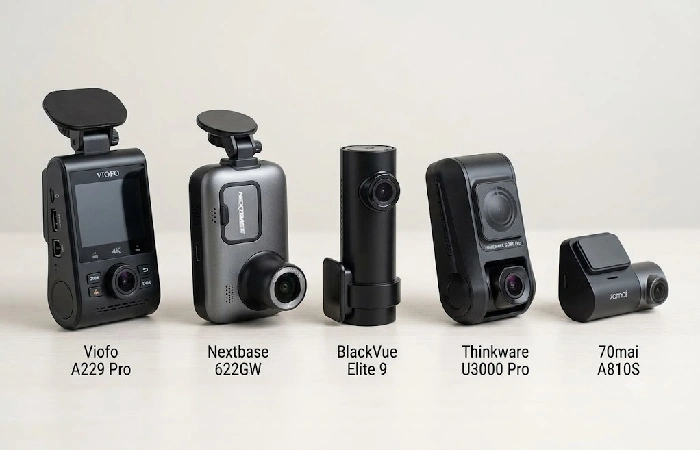
Best overall: Viofo A229 Pro
Both channels are based on the same hardware: Sony‘s STARVIS 2 sensor, 4K in the front, and 2K in the back, the pairing that maintains image usability once the sun goes down instead of turning the screen into colored static. Comes with an integrated CPL filter, to combat panel glare the limiting factor on lesser rigs, with no indication of how bad it is until you‘re filming and watching the clip. Typically less than $300. If you only look at one part of this entire guide, make it this one.
Best for families and safety features: Nextbase 622GW
Nextbase pushes the most on the driver-assist features, such as lane departure warnings, sharing your emergency location via what3words and an app that actually feels integrated. It is noticeably more expensive than the Viofo, and the video quality is still pretty decent but a little softer than STARVIS 2. Still worth it if having the alerts and all the bells and whistles is worth extra to you.
Best cloud-connected option: BlackVue Elite 9
Remote live view from your phone, motion alerts pushed to your lock screen, cloud backup so a stolen camera isn‘t a stolen evidence. This one does need a data plan to unlock the full remote capabilities and this is the ‘cost’ that is not highlighted in headlines. It is fine if you need to park your car somewhere dangerous often but might be overkill over a suburban driveway.
Best parking mode: Thinkware U3000 Pro
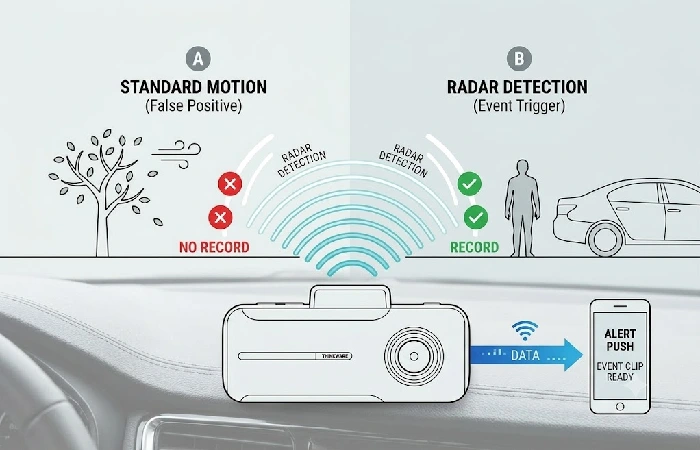
More accurate radar-based parking protection, as opposed to the ancient motion-detect systems most cheap cameras rely on. Noticing, with the camera in the park position, the big moving objects in the shot (cars and drivers) and ignoring the small, harmless ones like leaves or shadows. A feature like this goes a long way toward discouraging false alarms of a shadow, a passing headlight, even a falling leaf filling up a memory card with no consequence. If your car lives outside overnight and you have returned to find a new dent, with no note, this would be the place to spend.
Best budget pick: Viofo A119 Mini 2
Front-only, no frills, and that‘s the point. Daylight footage is crystal clear, makes surprisingly good low-light recordings for the price range, and does the one thing a dash-cam is needed for without charging a subscription fee. For its published specifications and price point this camera does most of what a flagship does, for a fraction of the price a good investment for those whose real risk is a parking-lot fender-bender and not a highway crash.
Best value two-channel: 70mai A810S
Buffered parking mode, WiFi 6, voice control at a price where any other system would typically cut all three. Build quality is slightly poorer than Viofo‘s, and the rear camera isn‘t spectacular. But if you‘re shopping for budget flagship money for a front and rear dash cam, you can‘t really do much better in terms of features for dollars spent.
| Camera |
Best For |
Front/Rear Res |
Sensor |
Approx. Price (US) |
Approx. Price (India est.) |
| Viofo A229 Pro |
Best overall |
4K / 2K |
STARVIS 2 |
~$300 |
~₹35,000 |
| Nextbase 622GW |
Families & safety features |
4K / 2K |
Standard |
~$400 |
~₹45,000 |
| BlackVue Elite 9 |
Cloud-connected |
4K / 2K |
STARVIS 2 |
~$450+ |
~₹50,000 |
| Thinkware U3000 Pro |
Parking mode |
4K / 2K |
STARVIS 2 |
~$400 |
~₹42,000 |
| Viofo A119 Mini 2 |
Budget |
2K / — |
STARVIS 2 |
~$130 |
~₹13,500 |
| 70mai A810S |
Value two-channel |
2K / 2K |
Standard |
~$180 |
~₹18,000 |
The one number most roundups skip
Bit-rate, the number of bits of data that the camera actually records per second of footage, gets glossed over behind sensor size and resolution in comparison charts. But it‘s all that really matters, as two different cameras can both use the same 4K resolution, while one puts out pin-sharp footage and the other generates a compressed, blocky catastrophe the moment there is motion on-screen. Even if a camera is recording 4K, a lower bit-rate will render fast-moving objects into an unrecognizable mess of pixels and keep a license plate from reading. Don‘t buy a camera without first checking what the bit-rate spec is.
Why this matters more than most people assume
Other reports from insurers and legal professionals indicate that dash cam footage can speed up fault determination and deters disputed claims. However we were unable to authenticate an AAA statistic linking the footage to a claim result so if you find any exact percentage on other sites, remember to be skeptical until AAA releases the primary source data! This seems to coincide with what turns up in insurers reports: footage that clearly shows lane position, braking, and the other driver’s behavior removes the ambiguity that most disputed claims get stuck on. A cheap, low quality camera that produces useless night footage doesn‘t just look embarrassingly less appealing on a shelf – it could also literally cost you money the only time you need that clip.
Distraction is a much greater issue with these conflicts than the general motives of most drivers would lead one to believe. The NHTSA has currently recorded some 3,000 fatalities annually in the US due to distracted driving, and dash cam footage is often the only hard proof of such distraction, as the distracted driver typically will not acknowledge his lack of attention at the scene.
India buyers: what changes
Prices diverge meaningfully when shopping Indian retail as opposed to US Amazon listings, and choice also leans toward different brands. Flagship Viofo and Thinkware units are more difficult to obtain within India and frequently command an import premium that puts them north of their US pricing when converted to INR. 70mai and modest Vantrue models have stronger local availability, and tend to be more practical choices for consumers shopping within India specifically, along with domestic options that do not always appear on US comparison guides. It‘s worth verifying current listings on Amazon.in and Flipkart directly rather than taking a US price at face value, as import duties can push the gap to 25-40% when converted to INR.
Check current dash cam listings on Amazon.in before buying, as pricing shifts often.
Front-only vs. front and rear vs. multi-channel
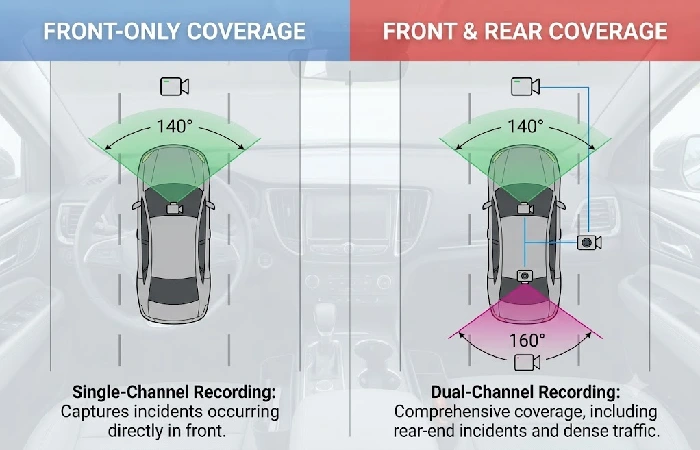
Front-only covers the crash that occurs in front of you, which represents the bulk of them. Front and rear adds coverage for rear-end collisions and reversing incidents — genuinely useful if you drive in dense city traffic where tailgating is routine. Three- and four-channel cameras (like the Vantrue N5S) feature a second interior-facing camera, and are more likely to benefit rideshare drivers and frantic parents than regular drivers. Choose the coverage you need based on how the car is actually used.
FAQ
1. Do I need a professional to install a dash cam?
No. A basic front-only unit is a suction mount and a cigarette-lighter plug, ten minutes tops.
2. Will a dash cam drain my car battery?
Only if it’s running in parking mode without a hardwire kit or a capacitor-based power system, and even then most modern units cut off automatically well before they’d actually kill a healthy battery.
3. Is dash cam footage actually admissible in court?
Generally yes, in most US states, provided it’s continuous rather than event-triggered only and the timestamp data is intact, though the exact rules vary by state and it’s worth checking local law if a specific case is on the line.
4. What’s the difference between buffered and standard parking mode?
Buffered parking mode keeps a rolling few seconds of footage before an impact is even detected, so it catches the moment leading up to a hit-and-run instead of starting recording after the fact, which is the version worth paying extra for.
5. Do cheap dash cams actually work?
Depends entirely on what “work” means to you. A sub-$60 unit will record daytime footage adequately and fail you completely in low light, so it works fine for a fender-bender in a parking lot and badly for anything after dark.
Where this leaves you
Buy it if you can afford the STARVIS 2 sensor. Full stop. Everything else (GPS, app polish, cloud stuff) is a benefit layer that depends on that one decision, not a replacement for it. For most drivers reading, the Viofo A229 Pro is the final stop. If you are on a tight budget, or only concerned about parking-lot dings, the A119 Mini 2 has everything you need without the expense, and if you park outside overnight in a neighborhood where that presents a real risk, invest instead in parking mode for the Thinkware U3000 Pro in place of a second, more complex front sensor.
For more on outfitting the rest of the car, see our full guide to the best car gadgets worth buying.
Methodology: This guide is sourced from the publicly available specifications, retailer listings and manufacturer documentation for dash cams being sold in July 2026. This research has not been physically verified with the units themselves, where models are listed as ‘best’, this is the result of combining the published specs with trusted user/retailer reviews.