Published: May 25, 2026
Last Updated: August 31, 2026
For the most part, home devices may seem fairly new to you. But in reality, they‘ve been quietly empowering everyday life for quite some time. What began as a few connected lights and speakers has grown into a thriving universe of smart tech that adapts to your routine, cuts costs, and truly alleviates the daily grind. In 2026, industry research values the worldwide smart home industry at well above $150 billion; there are over 20 million households with at least one smart home device in the US alone.
But this is what will be different: by 2026, the coolest home devices won‘t merely react to your commands, they will expect them. They will warm up or cool down the room before you are cold, lock the door if you‘ve left it open, and turn down the lights when it‘s time to go to sleep, and you won‘t even have to ask.
Whatever your reason for getting started in the world of smart home, this is how to find the smartest, most practical devices out there this year.
What Are Home Gadgets?
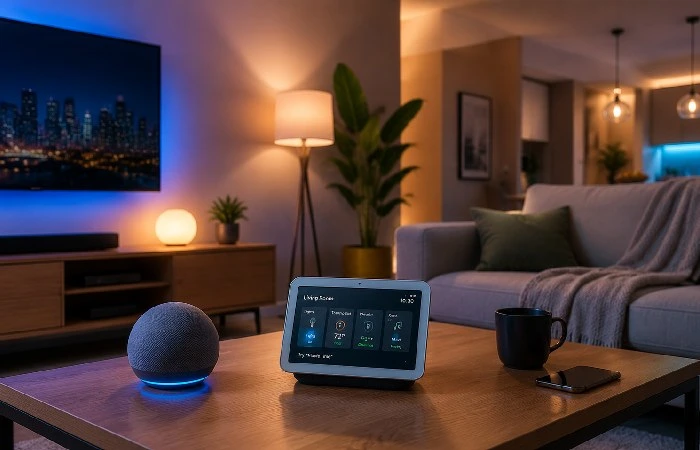
Home gadgets: these are all the electronic devices that are created with the purpose of making your life at home easier, safer, more efficient, or livable. As for 2026, the word home gadget mostly applies to smart home appliances- connected devices that can communicate with each other and can be operated using apps, voice command or routines.
Definition of Smart Home Gadgets
Smart home devices: Devices throughout the home that are connected to the Internet and automate or improve many of the home tasks with sensors, artificial intelligence, and wireless standards such as WiFi, Zigbee, Thread, or the international standard called Matter.
Unlike regular gadgets (think: straightforward thermometers, kitchen timers), smart home gadgets adapt to your lifestyle. A smart thermostat, for instance, doesn‘t just allow you to set a temperature; it figures out when you‘re around, monitors climatic trends, and adapts accordingly.
How Home Gadgets Have Evolved
The journey from simple remote-controlled appliances to today’s AI-powered systems has been rapid:
- 2015–2018: Early smart speakers (Amazon Echo, Google Home) popularized voice control
- 2019–2022: Smart displays, robot vacuum cleaners, and video doorbells were also installed
- 2023–2025: The standard of the matter came, and at last put an end to the “will this work with my system?” dilemma
- 2026: AI-led proactive automation -machines will anticipate and act before you request, using AI to manage the consumer environment and optimize data personal usage
Main takeaway: the current crop of home gadgets is no longer about showing off new technology but rather about actually useful, time-saving automation that applies regardless of brands.
Benefits of Smart Home Technology
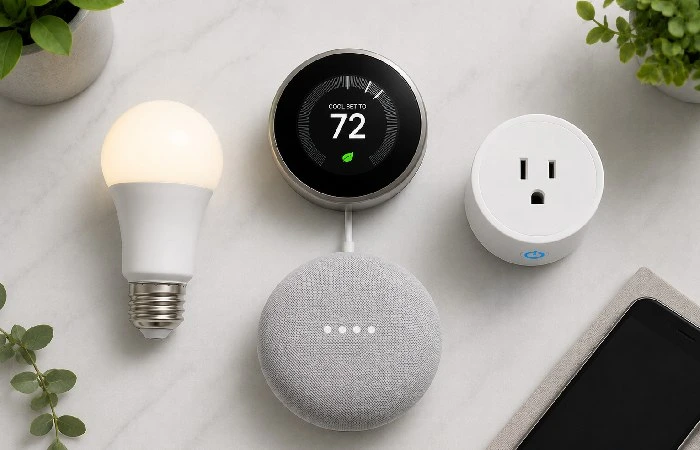
If you‘ve been sitting on the fence (as we have for quite some time) about whether to buy into this world, here‘s the data and real-world experience that actually say otherwise:
Convenience and Time Savings
The simplest immediate advantages? Convenience. Having your smart home automate boring, repetitive tasks so you don‘t have to:
-
Automated lighting varies depending on what time of the day it is, whether the room is being used, and the existing lights
- Roborock Saro 10 & other robot vacuums. These will automatically clean, and some will clean when you are not home
-
Voice routines allow you to issue one command (“Good morning” could turn on lights, make coffee, and give you your schedule).
Energy Efficiency and Cost Reduction
Here‘s the point where smart devices actually BECOME worth it. The ENERGY STAR rating system estimates that smart thermostats (which make up most of the smart devices currently available) save around 8% a year on heating and cooling bills. People who own certain brands of thermostats have seen savings as high as 23% in some cases, depending on the house and the weather.
| Device |
Average Energy Savings |
Typical Payback Period |
| Smart Thermostat (e.g., Ecobee Premium) |
For example, Different research projects and supplier investigations have Varying reduction of 10-25% of the energy to HVAC by employing intelligent thermostats
|
12–18 months |
| Smart LED Bulbs |
Up to 75% vs. incandescent |
3–6 months |
| Smart Power Strips |
5–10% by eliminating phantom loads |
6–12 months |
| Energy Monitoring Plugs |
Help you spot energy‑hungry devices so you can cut wasteful usage |
4–8 months |
Safety and Peace of Mind
Smart security devices provide real-time monitoring and instant alerts:
- Smart locks allow temporary guest access, no copying keys
- Video doorbells with AI tell us: Is it a person? Is it an obstruction? Is it a package? Is it a pet? Is it a car?
- Water leak sensors detect issues before they become costly emergencies
The smart home perspective: Don‘t be misguided, it‘s an added cost, but know that some of these systems can pay for themselves in the first or second year in savings, if you just look at the impact made by a few things (thermostats, lighting, etc) etc. It‘s not a luxury anymore.
Smart Gadgets for Different Rooms
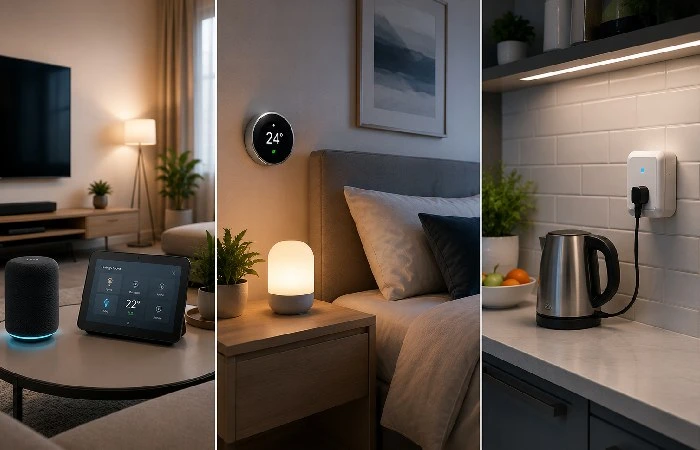
One thing that kills people when trying to have a more digital-centric life is the purchase of devices at random. The true smart way of doing it is how? Think of your house, room by room. Every room has different needs. And good digital gadgets? They cater to those needs.
Living Room Smart Devices
Your living room is the entertainment and relaxation hub. The most impactful gadgets here include:
Another tip: Begin with a smart display and two smart bulbs. This simple setup alone will give you that “Wow” without making you add 300 other components.
Bedroom Gadgets for Better Sleep
Sleep quality is one area where smart gadgets make a surprising difference:
Bathroom Smart Tech
Still an emerging category, but worth watching:
Key point: The greatest benefit is derived from using the correct device in the correct room. Avoid purchasing a smart speaker for your bathroom when you require a motion sensor nightlight.
AI and Home Automation
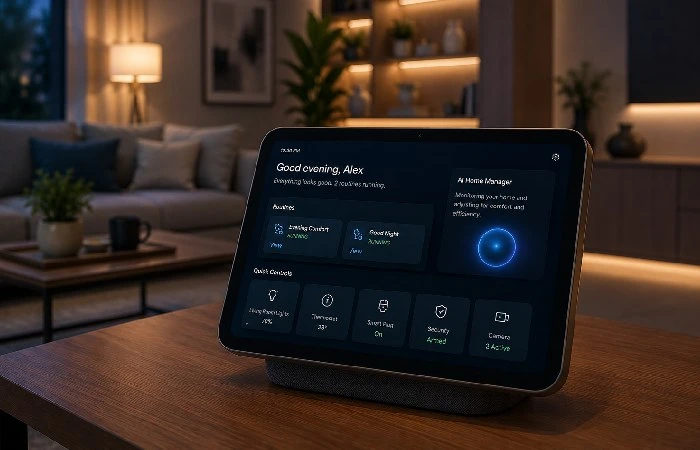
This is where 2026 home gadgets get genuinely exciting. Artificial intelligence has moved home automation from “set a timer” to “the house manages itself.” For a closer look at the devices leading this shift, see our guide to the best AI-powered gadgets for smart homes.
How AI Powers Modern Gadgets
Modern AI in home gadgets works through three layers:
- Pattern Recognition Devices recognise your habits, getting up, leaving the house for work, and returning to sleep
- Predictive Automation: conjecturing appliances do it themselves. Cooler will start cooling your house before you‘ve walked through the door, dimming the lights as the sun goes down
-
Natural Language Understanding: Voice assistants such as Alexa Plus and Google‘s Gemini for Home now respond more to conversational commands than fixed phrases
Proactive vs Reactive Automation
| Feature |
Reactive (Old) |
Proactive (2026) |
| Thermostat |
The temperature change can be seen on the display as you can increase the temperature, or decrease it manually or it can be programmed for a timetable |
AI adapts to your occupancy, weather forecast, and your comfort profile
|
| Lighting |
You say, “Turn off the lights.” |
The lights dim automatically when you start watching TV |
| Security |
The camera records when motion is detected |
The camera identifies who is at the door and notifies you accordingly |
| Cleaning |
You schedule a vacuum run |
Robot vacuum cleans after detecting you’ve left the house |
Choosing the Right Ecosystem
Before buying any smart gadget, decide on your ecosystem:
-
Amazon Alexa: Most third-party devices supported. You want this if using mixed-brand devices
-
Google Home: Deep integration with Nest products, and really good at natural language
-
Apple Home Kit: Best for those who need to prioritise privacy and are already familiar with the Apple world
In terms of practical use, it’s better to choose the ecosystem that corresponds with the equipment you have at the moment and the phones in your home. For example, if your family uses a lot of iPhones and already has an Apple TV or a HomePod, then HomeKit often works more smoothly; if you have a variety of Android mobiles and Fire TV or Echo speakers, your best options are many times to rely on Alexa.
The positive side? Matter, the latest standard (adopted in 2026), allows nearly every device to work with each of the 3 ecosystems. Look for a “Matter-certified” badge on the products you buy.
Most important point to remember: automated AI is the best argument for buying smart home tech in 2026. It turns your smart home from a bunch of gadgets into one integrated system.
Budget-Friendly Home Gadgets
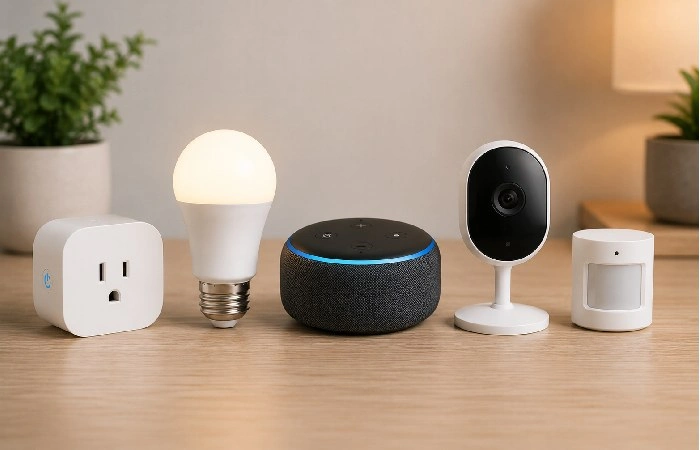
You don‘t have to spend thousands on a smart home. Many of the most practical gadgets are less expensive than a night out.
Best Smart Gadgets Under $50
| Gadget |
Approx. Price (US) |
Approx. Price (India) |
What It Does |
| Smart Plug (TP-Link Kasa) |
10–15 |
₹800–₹1,200 |
Automate any “dumb” appliance |
| Smart LED Bulb (Philips Wiz) |
8–12 |
₹600–₹900 |
Color-changing, app/voice control |
| Motion Sensor |
15–25 |
₹1,000–₹1,800 |
Trigger lights, alerts, or routines |
| Mini Smart Speaker |
25–40 |
₹2,500–₹3,500 |
Voice control hub for any room |
| Smart Power Strip |
20–35 |
₹1,500–₹2,500 |
Control multiple devices individually |
Where to Find Deals (US and India)
- US: Sellers have historically found that their highest sales for smart home goods have occurred during Amazon Prime Day (July, Black Friday, and Cyber Monday
- India: Display Amazon Great Indian Festival, Flipkart Big Billion Days, and Amazon Day sales with discounts, special offers, and heavy discounts on your purchase of smart devices of Philips, TP-Link, Amazon Echo, etc.
Most important tip: Begin modestly. For less than 25 dollars / 2,000, smart light fixtures provide instant improvement throughout your house; your automation potential is limited only by your budget.
Kitchen & Office Smart Devices
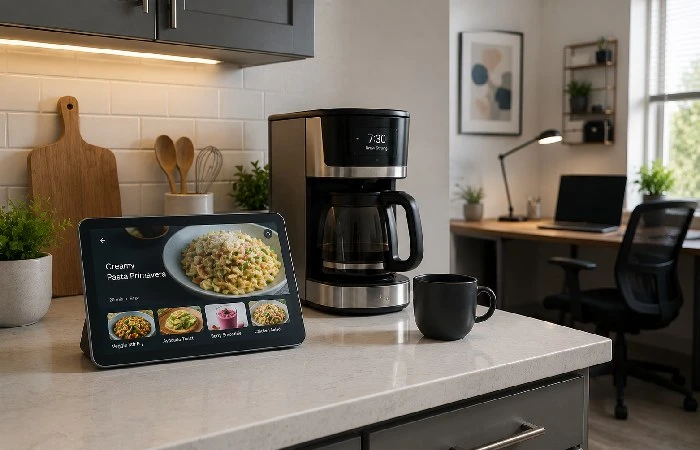
Two places in the home where we save tons of time thanks to smart technology and gadgets are our kitchen and home office.
Smart Kitchen Must-Haves
The kitchen is arguably where smart technology makes the most tangible daily difference:
- Smart displays (Echo Show, Nest Hub) –watch what you‘re doing without using your hands, while you multitask and video chat in the kitchen
- An AI-enabled oven uses a camera inside the oven to identify the food once put in the oven. This could then begin to change the cooking time and temperature
- Smart fridges- Already, they scan expiration dates, recommend recipes based on their contents, and prepare shopping lists for grocery shopping.
- Smart coffee makers — have you brewed your coffee in the morning on the schedule or through voice command
Your kitchen‘s smart display might be the smartest thing to do for the home. No more sorting through useless, discontinued kitchenware; instead, you just remove your hand, and it transforms into a recipe book, timer, speaker, and videocall device.
Home Office Tech Essentials
For the growing number of remote and hybrid workers:
- Smart daytime-optimised desk lamps with circadian lighting reduce eye strain of long working hours
- Smart power strips for monitors and peripherals power everything down at the end of the day
-
For noise-cancelling smart speakers that can also be used as white noise generators during focused time, use
-
Air quality monitors all measure CO, humidity, and temperature to help optimise concentrations.
Important note: Kitchen and Office top-rated gadgets won’t be glamorous, but they provide the most daily value by virtue of the fact that you happen to use them all the time.
Home Security Technology
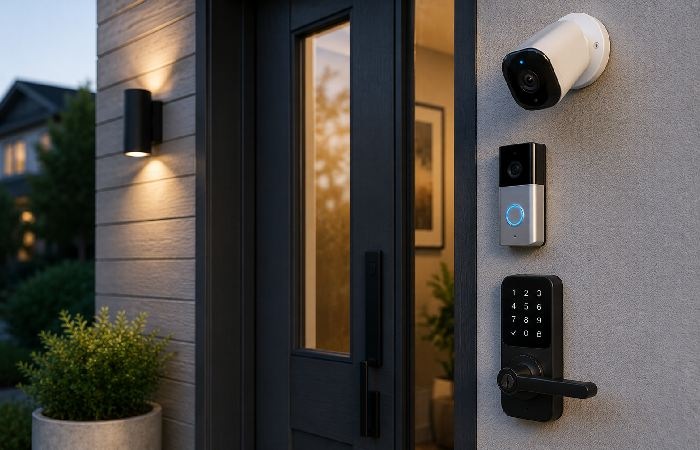
People have always bought smart home gadgets to make them more secure. And now the tech has become, well, pretty damn smart.
Smart Locks and Video Doorbells
- There are a few off-the-shelf smart locks (e. G., Level Lock Pro) with key-less entry and auto-lock features. There are newer models designed with infrared wireless charging (e. G. The Lockin V7 Max) so that batteries are not replaced
-
Video doorbells (Eufy E340, Ring Battery Doorbell) use AI detection to tell humans, cars, animals, and packages, reducing false notifications from the ground.
Indoor and Outdoor Camera Systems
- On the plus side, these new cameras (Aqara Camera Hub G5 Pro, Arlo Essential) process images locally, so the video doesn‘t need to be uploaded to the cloud for processing. Big win for privacy
-
Outdoor cameras with night vision, two-way audio, and all-weather construction are installed at doors and yards.
-
Integration tip: Truly intelligent is logging people detected with smart locks and lights. When a person is detected at 2 AM, it turns on the outside lights, records, and notifies you all fully automatically
Main point to remember: smart security isn‘t just about cameras these days. It‘s about designing automated solutions to safeguard your home even while you‘re asleep or away.
Eco-Friendly Smart Gadgets
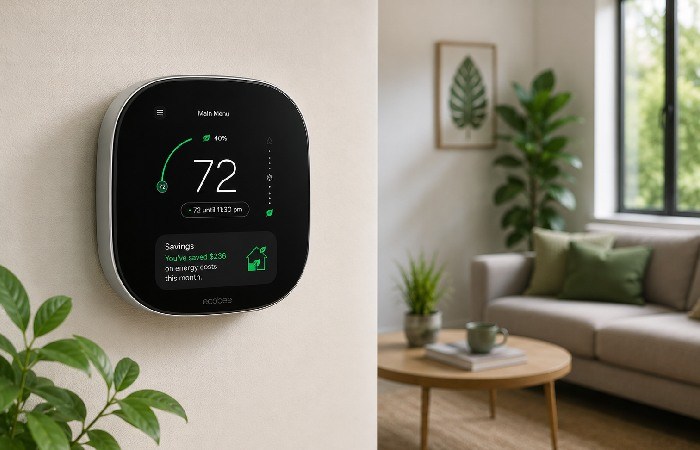
Utility prices are increasing around the world, and the awareness of our world, eco-easy smart gadgets are one of the fastest-growing sectors in 2026.
Smart Thermostats and Climate Control
Smart thermostats are the single most impactful eco-gadget you can buy:
In addition to thermostats, smart ceiling fans and smart blinds also work in conjunction with your climate system.
Water and Energy Monitors
Key Point: Green smart devices save the environment and you money on your power bill; savings can even cover the cost within a year.
Common Mistakes When Buying Home Gadgets
After years of testing and recommending smart home devices, here are the pitfalls I see most often:
Ignoring Ecosystem Compatibility
The error: Purchasing the most inexpensive or most fashionable-looking device without ensuring that it would be compatible with your current system.
The fix: Make sure any device you buy is compatible with your existing ecosystem (Alexa, Google Home, or Apple) – or even better: find one that is Artter-certified and interoperates with all.
Overcomplicating Your Setup
The error: e buying 15 devices at a time, creating amazing automations, and getting angry when things go wrong.
The fix: Begin with 2-3, learn them, and add when ready. Smart homes are best built one or a few at a time, later growing into a complete system.
Other Common Pitfalls
-
Unreliable Wi-Fi: smart devices are only smart if your network is. Get a mesh Wi-Fi system before you hook up multiple gadgets.
- Don‘t forget subscription costs: A number of the cameras and doorbells online require a monthly subscription for cloud storage; take this into account with your budget.
-
Buying it because of hype: Even if a product is hot does not necessarily mean it is solving a problem you actually have.
Myth vs Fact: Smart Home Edition
| Myth |
Fact |
| “Smart homes are only for tech experts.” |
Most new devices are configured within minutes via user-friendly app instructions no technical skills required. |
| “Smart devices always listen to you.” |
Voice assistants do not process audio until it is tripped by the wake word. Several 2026 devices support local-only processing.
|
| “Smart home tech is too expensive.” |
There are entry-level smart plugs for as low as $10, and it is still possible to put together a working starter kit (smart plug, bulb, mini speaker) for under $100 in a lot of countries.
|
| “You need a hub for everything.” |
Through Matter and Wi-Fi-based products, tons of devices are compatible straight away with your smartphone or voice assistant– they don‘t require a hub. |
| “Smart gadgets are just gimmicks.” |
The good news for consumers is that these devices can dramatically lower the lifetime cost of heating and cooling, and Robot Vacuums regularly occupy a majority of farmers’ floor-cleaning hours. These are quantifiable quality-of-life improvements.
|
Future Trends in Home Technology
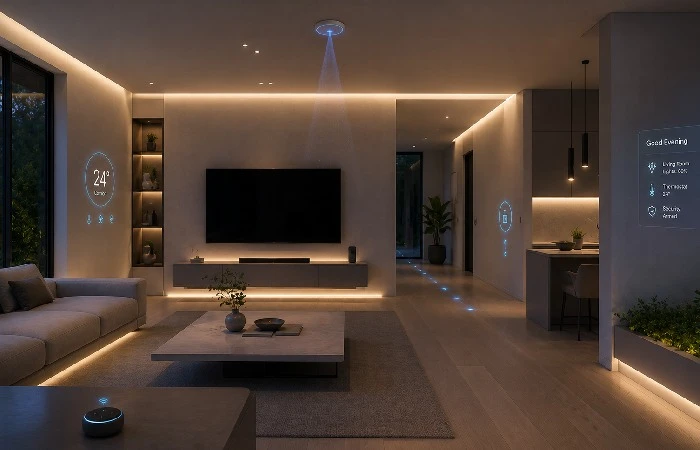
The smart home space is evolving fast. Here’s where things are headed — and why it matters for what you buy today.
Matter Protocol and Universal Compatibility
The Matter standard. The biggest breakthrough in the history of smart homes. An open-source system run by Apple, Google, Amazon, and Samsung that guarantees interoperability between various platform types.
What it means for you: Any Matter certified device purchase today works with all the big ecosystems today, and whatever the future has in store. When shopping, look for Matter-enabled devices.
Ambient Computing and Invisible Interfaces
But the next frontier isn‘t more screens, it‘s fewer screens. Ambient computing is when your home predicts what you want before you do:
Other trends to watch:
- Robotics: These would be vacuum robots that could climb stairs and do multi-surface cleaning.
-
Monitoring health: A comfortable home environment is important to most people – smart mirrors and other wearables that sense vitals and automatically regulate the home environment response.
-
Solar-smart integration: Home batteries and solar panels working together with smart devices to optimise use of the energy grid
Main point: Get Matter-validated gadgets now so that they work with whatever‘s coming next. Smart homes are headed for invisible, preemptive intelligence.
Best Smart Gadget Brands in 2026
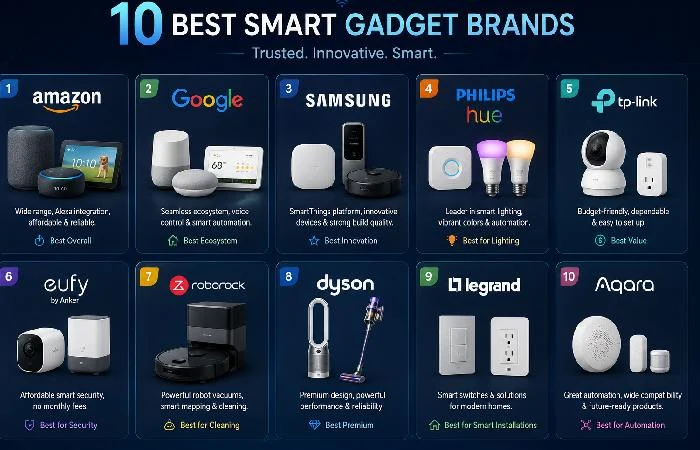
Not all brands are created equal. Here’s a snapshot of the most trusted names in smart home tech:
Premium Brands
| Brand |
Best For |
Notable Products |
| Philips Hue |
Smart lighting ecosystem |
Hue bulbs, light strips, outdoor fixtures |
| Ecobee |
Climate control |
Smart Thermostat Premium with room sensors |
| Lutron |
Reliable smart switches |
Caséta dimmers, Pico remotes |
| Arlo |
Wireless security cameras |
Arlo Pro 5, Essential Indoor |
| Apple |
Privacy-first smart home |
HomePod, HomeKit ecosystem |
Value Brands
| Brand |
Best For |
Notable Products |
| TP-Link (Kasa/Tapo) |
Budget smart plugs and cameras |
Kasa Smart Plug, Tapo cameras |
| Philips Wiz |
Affordable smart bulbs |
Wiz LED bulbs and light bars |
| Amazon (Echo/Ring) |
All-in-one ecosystem |
Echo Show, Ring Doorbell, Echo Dot |
| Eufy |
Subscription-free security |
Video Doorbell E340, Indoor Cam |
| Xiaomi/Aqara |
Budget automation (popular in India) |
Aqara sensors, Xiaomi bulbs, smart plugs |
Most important factor (if you want to…)… Choose a brand depending on your most valued criteria: data security (Apple), diversity of available product ecosystem (Amazon), and affordable value for money ( TP-Link, Xiaomi). Lock-In will be less important with the emergence of the Matter protocol.
Methodology (Quick Note)
This guide uses available data as of May 2026 concerning the current state of smart home gadgets, among it manufacturer specifications, reviews, independent testing, and energy efficiency resources. Before purchasing, ensure you double-check prices, features, and availability from the manufacturer‘s pages or your local retailers.
FAQ’s
What are the best home gadgets to buy in 2026?
One of the smartest appliances in use in 2026 households is: smart. thermostats (Ecobee Pemiium), smart. lightings (Philips Hue ), Voice AI guided assistants ( Amazon Echo Show 11, Google Nest Hub Max), smart. Like the distinctive ones (Level Lock Pro) and multi-purpose robots (Roborock Saros 10). They all rely on the price, the room, and the ecosystem.
Are smart home devices worth the investment?
Yes. A smart thermostat by itself can cut the heating and cooling bill by up to 26% and save you hundreds of dollars over its lifetime.
How do I start a smart home on a budget?
Begin with a smart plug (10–15) and a smart bulb (8– 12). Throw in a mini smart speaker for voice commands (25–40). With this,, you can build a functional smart home for just under $65. In India, these build prices start at about 2,000– 4,000 during sale events.
Which smart home ecosystem is best — Alexa, Google, or Apple?
- Alexa is best for the widest device compatibility
- Google Home excels at natural language understanding and Nest integration
- When it comes to privacy, Apple HomeKit doesn‘t compromise. Because it lives within the Apple ecosystem, all data is stored safely on your devices.
However, with the Matter standard, most new devices now support all three, so this decision doesn‘t matter quite as much.
Do smart home devices work without the internet?
Most of the current devices (more so the simple ones, smart switches, Zigbee sensors,…) are able of local processing and can do simple things without being connected. The others, like voice assistants or anything that requires access for a large part of the time, firmware updates, or any cloud services, need to be connected.
Are smart home gadgets safe and private?
Yes, if it is well configured. Use dedicated devices, which keep data on the device (local computing power, data stays on the device), use other Wi-Fi passwords, two-factor authentication, and patch their firmware. Apple, Aqara, and Eufy are privacy-centred.
What is the Matter smart home standard?
Matter is the open source connectivity solution that is adopted by the big names like Apple, Google, Amazon, and Samsung. This solution is committed to providing interoperability of the devices across all three platforms with absolutely no branding. By 2026, most of the home smart gadgets will be certified.
What smart home gadgets are popular in India?
The most preferred devices for a Smart Home in India during 2026 are as follows: Xiaomi Smart Bulb and Plugs, Amazon Echo Dot speakers, Aqara Smart Sensors, TPLINK Tapo Smart Security cameras, and Philips Wiz smart light Bulbs. While we do see different kinds of discounts on Flipkart and Amazon India during festivals.