Published: July 27, 2026
Last Updated: August 31, 2026
A car is stolen in the USA approximately every 37 seconds. Whether it’s recovered wrecked or whole comes down to one choice made before anything went wrong: did it possess a functioning GPS tracking device powered up? This guide deconstructs the varieties of devices, the circumstances that a particular kind solves, and the cost and recovery figures head on, including points where the numbers are contradictory.
Quick answer: There are three types of GPS car trackers: OBD plug-in, hard wired, and mobile battery powered. They are appropriate to different situations, and this guide will tell you what type is suitable, as well as providing the hard facts on theft recovery, accuracy and subscription pricing.
Definition
A GPS car tracker is a piece of technology which allows a vehicle’s current location to be reported back to an app or dashboard. It is used by drivers, parents and fleet managers for many reasons from tracking location to recovering stolen vehicles and even tracking journeys.
What a GPS Car Tracker Actually Does
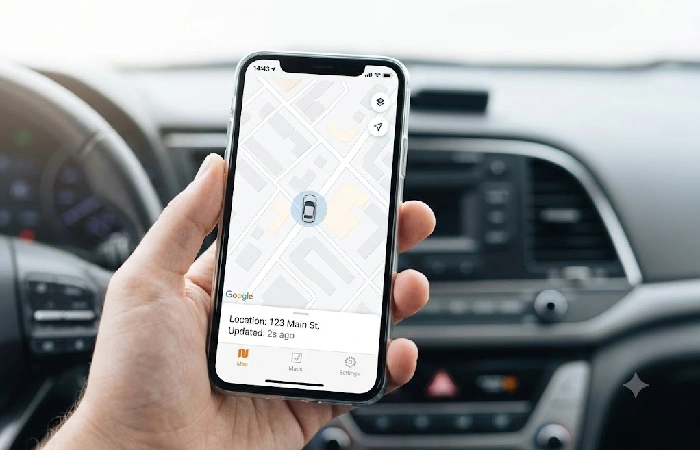
Cut out the marketing and it’s just this. A GPS car tracker transmits the location of your vehicle to an application or a dashboard in near real time. Portable trackers require no installation and can often forgo the monthly service fee. OBD and hard wired units are always connected to the vehicle supplying it power as well as additional data including speed, diagnostics and much more. The common refresh rate ranges from 15 to 60 seconds. GPS-enabled devices are typically accurate to within about 16 feet under open sky, according to GPS.gov’s accuracy data, though that number worsens near buildings, bridges, and trees — tighter in an open lot, looser underground or downtown. Trip history, geofence alerts, hard-braking flags, all standard now.
Why This Guide Doesn’t Read Like the Others
Search “best gps car trackers” and count how many search results are a tracker company running its own blog and marketing its own product to the number one position. Nearly every one. That’s the business model, not an accident.
No product is sold here, so nothing that appears on this page has to win. That’s a somewhat different goal than most car gadget roundups, where the top choice tends to be whoever wrote the entry.
Vehicle thefts in the US have fallen 35.4%since the 2023 high, to 659,880 in 2025, as found in the 2025 Vehicle Theft Report by NICB. Real progress, and tracker usage are partly to blame. Recovery-rate figures are more inconsistent. One provider claims 90%. Another claims 94%. LiveViewGPS’s own article calls out the discrepancy instead of choosing a plausible figure, and that’s the more credible of the lot. What appears supported by the various sources is not one figure but the trend: tracked vehicles are recovered more quickly and more often than the roughly 60% baseline of untracked.
Three Tracker Types, and Which One Actually Fits
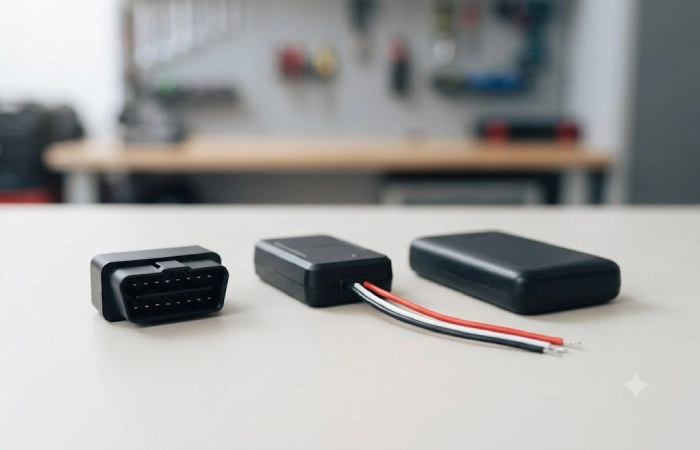
OBD-II plug-in. Installed in the diagnostic port most vehicles built after 1996 already have, usually tucked under the dash. Takes less than a minute, no battery to worry about because it takes power directly from the vehicle. But, that diagnostic port location is easy to find and just as easy to remove, which makes this option less than desirable. Nice for a daily driver that is going to have power all the time. Nice for teen monitoring, where uptime trumps secrecy.
Hardwired is the other way around. Run three wires, power, ground, ignition sense, directly into the car‘s 12 volts system. No plug for anyone to see. Quite a few have a backup battery that sends off a ping to the owner if it’s disconnected, which is an often overlooked feature. Kit installation is best done by a professional and once installed stay with the car and is almost impossible to transfer to another. The fleet vehicle or high value vehicle choice where, in the long run, tamper resistance is more important than ease of access.
Next, portable battery-based trackers. Plug and play, no wires to hook up, just set them down. Battery life swings from a few days to well past a year, all based on frequency of requirement and power mode used. Comparing units between vehicles, trailers, and the RV that stays parked all winter is a breeze. The drawback clearly is responsibility for the charge, quicker update intervals depleting the battery rapidly.
Hiding a Tracker: What Actually Matters
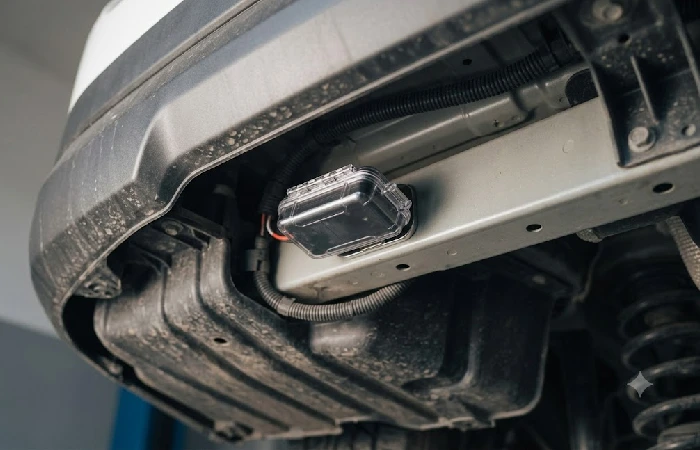
Placement is equally important as well. Magnetic mounts hide a battery pack somewhere under a wheel well or inside a bumper cavity, but if it’s going to be outside the vehicle you would want to make sure that it’s IP67 rated. Don’t place in the glove box. Don’t place in the center console.
Tamper alerts are more important than most buyers realize. Most of the hardwired units and the better portable ones incorporate them and they go off right away if power is interrupted or the device is yanked away. That’s probably the most useful anti-theft feature apart from GPS location itself. In a high-theft area, run a pair, one semi-hidden or visible and the other fully hidden. A thief discovering and killing your only tracker before it reports to the world isn’t very useful.
No Monthly Fee vs Subscription: The Tradeoff Nobody Says Out Loud
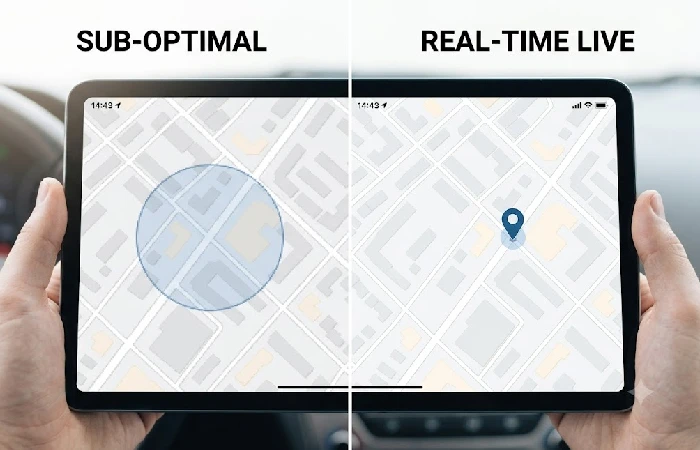
Cellular-based trackers generally cost between $6 and $25 per month. That’s the cellular data plan and cloud platform center behind them. “No monthly fee” trackers avoid that charge by using a Bluetooth crowdsourced network exactly like the one powering Apple’s Find My. Works well in a busy parking lot. Not so much in a locked impound lot or a remote gravel lot with no phones around to retransmit.
If that’s truly real-time tracking – wherever the car happens to be – then you should pay for the subscription. It’s the best choice, period. If the job is an inexpensive backup layer to a car that isn’t often far away from other humans, then a no-fees one makes a decent secondary device. Not a replacement for primary.
Teen Drivers and Real-Time Tracking
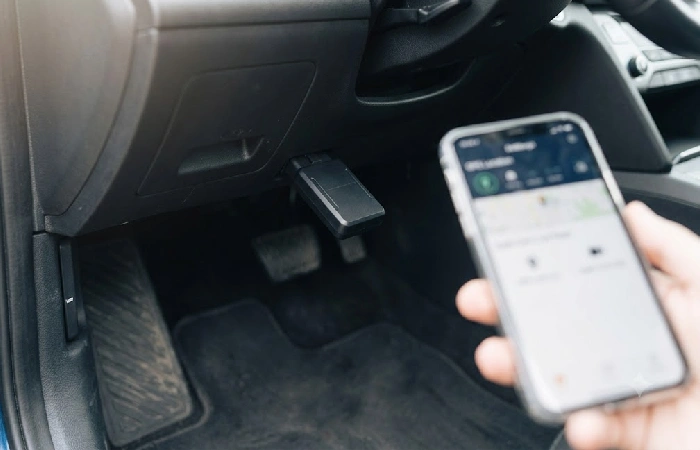
Different but same priority here, not a focus on recovery but a simple, all-the-time monitor of behavior. OBD-II device of choice for this use case because you don’t need teen buy-in to get installation, plus it transmits speed, over-braking and geofence notifications instantly when the car crosses in or out of a defined boundary (school, home, in-town). Powered constantly from the car, avoids battery failure far from the destination. Insurance companies discount premiums by up to 20% for capturing reliable, regular safe driving data from a device like this. Call your insurer before writing off the subscription as a purely overhead expense.
What Recovery Odds Actually Look Like
Here’s the truth. Tried-and-tracked vehicles get recovered more frequently, and in less time, than tried-and-unguided cars. The precise figures will change from “report by report,” which is why it is not stated here with a specific polite number. What remains constant, however, is the process: an unseen, constantly working tracer with rapid-motion alerts provides police a location in a matter of minutes, rather than days. That interval is what has the potential to determine the fate of the vehicle: towed back and found or plundered in some chop shop.
Is It Legal to Track a Car?
our own car, titled in your name — fair game. Company vehicles, employers can track them but need to disclose it through a written policy first. A minor’s car that you own, generally fine, though talking about it openly beats surprising them later. Someone else’s car, without their consent — that’s a different situation entirely. It crosses into anti-stalking and privacy law in most places, and the reason behind it doesn’t change that.
Matching the Tracker to the Situation
Daily driver in a 1996-or-newer car, OBD-II plug-in. Long-term hardwired installation in a company fleet or high-value car to keep forever. Something that is parked for a long period, trailer, RV, backup car, portable battery pack. Teen monitoring, OBD-II again, same justification as the daily driver scenario. Needs a cheap second layer, no-fee Bluetooth tracker, but solely as a backup. Get it wrong and it becomes a useless burden. A car with a hard-wired tracker that you will be trading in 2 years’ time just throws away the installation fee. Bluetooth tracker fitted onto a fleet vehicle that needs regular tracking isn’t solving the problem it was bought for.
Pair whatever you get with a dash cam, another kind of evidence, different from the first, in picture instead of position, and combined they fill in a lot of the gaps neither does.
FAQ
1. Is it illegal to put a tracker on someone’s car?
Yes, it can if there’s no ownership or consent it can infringe anti-stalking as well as privacy legislation.
2. Do these things need a subscription?
Most live cellular based trackers do, somewhere in the $6-$25 per month range. Bluetooth “no fee” units eliminate that cost but sacrifice the real-time range in doing so.
3. How accurate are we talking?
Open wide open from 8 to 15 feet. On the underground or in the downtown grid, drops to 30-50 feet.
4. Work without cell service?
Not the standard ones. Satellite trackers do, at a significant premium on both the hardware and the subscription.
5. GPS tracker vs OBD tracker, same thing?
Not quite. OBD is one method of powering and installing a GPS tracker, not a separate category. Every OBD tracker is a GPS tracker. Not every GPS tracker is an OBD tracker.
6. Battery life?
Anywhere from a couple of days to 18 months. Completely a matter of how often the whistle blows and what sort of energy state you’ve put it in.
Whatever you land on, none of it matters if it’s not actually running when something happens. Set it up. Test the alerts. You need to make sure that it has a signal on the routes that you actually travel before you rely on it.