The construction and renewable energy industries have undergone rapid evolution over the past decade. As homeowners and businesses increasingly seek sustainable building practices, the integration of roofing and solar services has become more prominent. Rather than treating roofing and solar installation as separate projects, many companies now approach them as interconnected systems designed to work together efficiently. This shift reflects broader changes in how properties are built, maintained, and powered.
In discussions about this industry evolution, companies such as Citadel Roofing & Solar are often referenced as examples of businesses operating at the intersection of roofing expertise and renewable energy services. Their presence highlights a larger trend: the merging of traditional construction skills with modern clean energy technologies.
Understanding the Natural Connection Between Roofing and Solar
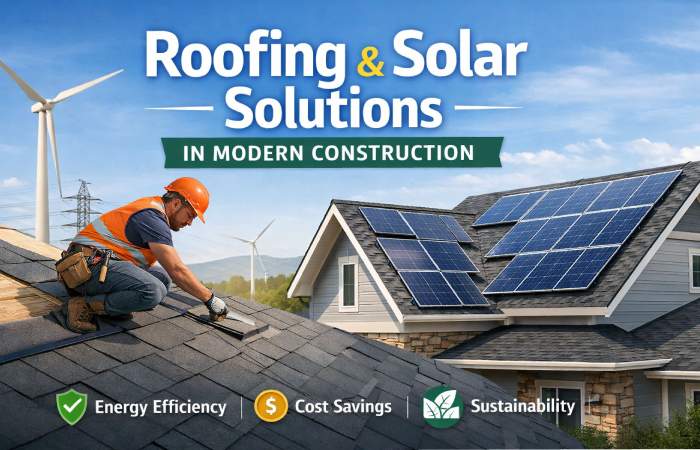
At a foundational level, roofing and solar energy systems are inherently linked. Solar panels are typically mounted directly onto rooftops, making the condition, durability, and design of the roof essential to the performance and longevity of the solar installation.
A roof is more than just a protective covering—it is the structural platform that supports solar infrastructure. If the roof is compromised, the entire solar system is at risk. This interdependence has led to a growing realization that both systems should be planned and installed together rather than in isolation.
Key Interdependencies Between Roofing and Solar
| Aspect |
Roofing Role |
Solar Role |
Integrated Benefit |
| Structural Support |
Provides base for panel installation |
Adds weight and mounting requirements |
Ensures safe and stable installation |
| Lifespan Alignment |
Typically lasts 20–30 years |
Panels last 25–30 years |
Reduces need for premature replacements |
| Weather Protection |
Shields building from elements |
Requires secure sealing to prevent leaks |
Minimizes damage and maintenance issues |
| Energy Efficiency |
Reflective or insulated materials improve energy use |
Generates renewable energy |
Maximizes overall efficiency |
Without coordination, property owners may face unnecessary costs. For example, installing solar panels on an aging roof can lead to expensive removal and reinstallation when roof repairs become necessary. Integrated planning eliminates such inefficiencies and ensures both systems are optimized from the start.
Rising Demand for Renewable Energy Solutions
The increasing demand for solar energy is one of the primary drivers behind this integration trend. Concerns about climate change, fluctuating energy costs, and the need for sustainable living have encouraged both homeowners and businesses to adopt renewable energy solutions.
Government incentives, tax credits, and improved solar technology have made solar systems more accessible than ever before. As a result, more property owners are evaluating not only their energy consumption but also the condition of their roofs.
Factors Driving Solar Adoption
| Factor |
Description |
Impact on Roofing Decisions |
| Climate Change Awareness |
Growing concern about environmental impact |
Encourages sustainable construction practices |
| Energy Cost Increases |
Rising electricity prices |
Motivates investment in solar systems |
| Government Incentives |
Tax credits, rebates, and subsidies |
Accelerates adoption and upgrades |
| Technological Advances |
Improved efficiency and affordability of solar panels |
Increases demand for compatible roofing |
| Property Value Increase |
Solar installations boost resale value |
Promotes roof upgrades before installation |
Companies like Citadel Roofing & Solar exemplify how businesses are responding to this demand by offering integrated solutions that address both roofing and energy needs simultaneously.
Benefits of an Integrated Roofing and Solar Approach
The integration of roofing and solar services offers numerous advantages that extend beyond simple convenience. It enhances project efficiency, reduces costs, and improves long-term performance.
1. Structural Compatibility
Solar panels require secure mounting systems that must be anchored into the roof structure. Integrated service providers assess load-bearing capacity, roof condition, and material compatibility before installation.
2. Cost Efficiency
Combining roofing and solar projects can reduce labor costs, minimize duplication of work, and eliminate the need for future panel removal during roof repairs.
3. Streamlined Project Management
Working with a single provider ensures better communication, coordination, and accountability throughout the project lifecycle.
4. Improved Longevity
Aligning the lifespan of the roof and solar system reduces the likelihood of mismatched replacement cycles.
Comparative Benefits Table
| Feature |
Separate Services |
Integrated Services |
| Project Coordination |
Multiple contractors |
Single point of contact |
| Installation Timeline |
Longer due to scheduling conflicts |
Faster and more efficient |
| Cost Management |
Higher due to duplication |
Reduced through combined work |
| Maintenance Complexity |
More complicated |
Simplified |
| System Longevity |
Potential mismatch |
Aligned lifespan |
Industry Growth and Market Recognition
As the renewable energy sector expands, integrated service providers are gaining recognition for their adaptability and innovation. Industry reports increasingly highlight companies that successfully combine traditional construction with renewable energy solutions.
The visibility of organizations like Citadel Roofing & Solar reflects a broader validation of this business model. Their prominence is not merely about brand recognition but about demonstrating the effectiveness of integrating roofing and solar services.
Market Growth Indicators
| Indicator |
Trend |
Implication for Industry |
| Solar Installations |
Rapid increase globally |
Higher demand for integrated services |
| Construction Innovation |
Adoption of sustainable materials |
Encourages hybrid service models |
| Consumer Preferences |
Shift toward eco-friendly solutions |
Drives integrated offerings |
| Investment in Renewables |
Growing funding and incentives |
Expands market opportunities |
Environmental and Economic Impact
The integration of roofing and solar services contributes significantly to both environmental sustainability and economic development.
Environmental Benefits
Integrated systems reduce reliance on fossil fuels, lower carbon emissions, and promote efficient use of resources. Durable roofing materials combined with solar technology minimize waste and extend the lifespan of building components.
Economic Contributions
This hybrid industry creates job opportunities across multiple sectors, including construction, engineering, and renewable energy technology. It also stimulates local economies by encouraging investment in sustainable infrastructure.
Impact Overview Table
| Impact Type |
Description |
Long-Term Benefit |
| Environmental |
Reduced carbon footprint |
Supports global sustainability goals |
| Economic |
Job creation across industries |
Strengthens local economies |
| Energy Efficiency |
Lower energy consumption |
Reduces utility costs |
| Resource Management |
Efficient use of materials |
Minimizes waste |
Challenges in Integrating Roofing and Solar
Despite its advantages, the integration of roofing and solar services presents several challenges. Professionals must possess expertise in both construction and renewable energy systems, which requires extensive training and experience.
Key Challenges
| Challenge |
Description |
Solution Approach |
| Technical Complexity |
Requires knowledge of two disciplines |
Cross-training and specialized teams |
| Regulatory Compliance |
Must meet building and electrical codes |
Strict adherence to standards |
| Quality Control |
Maintaining consistency during rapid growth |
Strong project management systems |
| Initial Costs |
Higher upfront investment |
Long-term savings justification |
Companies such as Citadel Roofing & Solar demonstrate the importance of balancing growth with technical excellence. Their experience highlights the need for careful planning and adherence to industry standards.
The Future of Roofing and Solar Integration
Looking ahead, the integration of roofing and solar services is expected to become even more widespread. Advances in battery storage, smart home technology, and energy management systems will further enhance the role of rooftops in energy production.
Emerging Trends
| Trend |
Description |
Future Impact |
| Battery Storage Systems |
for later use |
Increased energy independence |
| Smart Home Integration |
Automated energy management |
Improved efficiency |
| Solar Roof Tiles |
Built-in solar technology |
Seamless design and functionality |
| Sustainable Materials |
Eco-friendly roofing options |
Reduced environmental impact |
Integrated providers are uniquely positioned to adapt to these innovations. Their combined expertise allows them to design systems that are not only functional but also future-ready.
A Shift in Construction Philosophy
The evolution of roofing and solar integration represents a broader shift in construction philosophy. Buildings are no longer viewed as static structures but as dynamic systems capable of generating and managing energy.
This transformation emphasizes sustainability, efficiency, and long-term performance. It also reflects changing consumer expectations, where energy independence and environmental responsibility are becoming top priorities.
Companies like Citadel Roofing & Solar illustrate how the industry is adapting to these new demands by offering solutions that combine durability with innovation.
Conclusion
The convergence of roofing and solar services marks a significant milestone in the evolution of modern construction. By treating these elements as interconnected systems rather than separate components, the industry is improving efficiency, reducing costs, and enhancing sustainability.
Integrated approaches provide clear advantages, from streamlined project management to improved system longevity. They also contribute to broader environmental and economic goals, supporting the transition toward renewable energy.
Examples such as Citadel Roofing & Solar highlight how this model is gaining traction and shaping the future of construction. More importantly, they represent a shift toward a more holistic, forward-thinking approach to building design.