Home care is rapidly evolving as more patients prefer receiving medical and non-medical support in the comfort of their homes. This shift has created a growing demand for Home Care Software Solutions—digital platforms designed to streamline operations, improve patient care, and ensure regulatory compliance.
According to industry insights, home care software helps agencies automate daily operations such as scheduling, billing, payroll, and documentation while improving communication between caregivers and patients . In this comprehensive guide, we will explore everything you need to know about home care software solutions, including features, benefits, top platforms, challenges, and future trends.
What Are Home Care Software Solutions?
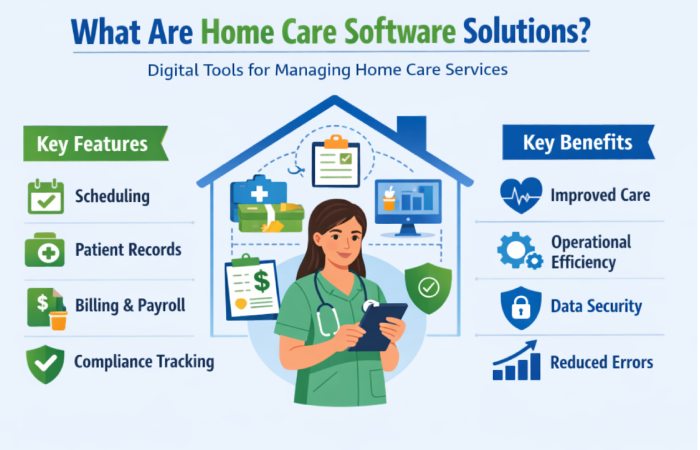
Home care software solutions are cloud-based platforms that assist healthcare providers in managing all aspects of home care services. These tools integrate administrative, clinical, and operational functions into one unified system.
They typically include modules for:
- Scheduling caregivers
- Patient record management
- Billing and payroll
- Compliance tracking
- Communication tools
By centralizing operations, agencies eliminate manual paperwork and reduce errors while improving efficiency and care delivery .
Why Home Care Software Is Essential in 2026
The home healthcare industry is becoming increasingly complex. Agencies must handle:
- Growing patient demands
- Strict regulatory requirements
- Workforce shortages
- Financial and operational pressures
Modern software solutions address these challenges by automating processes and enabling real-time coordination among teams. In fact, agencies can reduce administrative workload by up to 20–30% through automation and integrated systems .
Core Features of Home Care Software Solutions
Below is a detailed breakdown of the essential features every home care software solution should offer:
Key Features
| Feature |
Description |
Benefits |
| Automated Scheduling |
Assign caregivers based on availability and skills |
Reduces missed visits and improves efficiency |
| Electronic Visit Verification (EVV) |
Tracks caregiver visits digitally |
Ensures compliance and prevents fraud |
| Billing & Payroll |
Automates claims and staff payments |
Reduces errors and speeds up payments |
| Care Planning |
Personalized care plans for each patient |
Improves quality of care |
| Mobile Access |
Apps for caregivers on-the-go |
Real-time updates and flexibility |
| GPS Tracking |
Tracks caregiver location during visits |
Enhances accountability |
| Reporting & Analytics |
Generates performance insights |
Supports data-driven decisions |
| Communication Tools |
Secure messaging between teams |
Improves coordination |
These features collectively create a seamless workflow that enhances both operational efficiency and patient outcomes .
Benefits of Home Care Software Solutions
Home care software provides a wide range of benefits that directly impact care quality, efficiency, and profitability.
Benefits Overview
| Benefit Category |
Impact |
| Operational Efficiency |
Automates repetitive tasks and reduces paperwork |
| Improved Patient Care |
Enables real-time monitoring and personalized care |
| Financial Management |
Streamlines billing and reduces claim denials |
| Compliance & Security |
Ensures adherence to healthcare regulations |
| Scalability |
Supports business growth without infrastructure changes |
| Communication |
Enhances collaboration between caregivers and families |
Enhanced Accessibility and Mobility
Caregivers can access patient records and schedules anytime, anywhere using mobile devices, enabling flexible and responsive care delivery .
Better Care Coordination
A centralized platform allows healthcare teams to share real-time updates, reducing errors and improving outcomes.
Streamlined Documentation
Digital records eliminate paperwork and improve accuracy, saving time for caregivers and administrators.
Real-Time Communication
Secure messaging ensures quick updates on patient conditions, medication changes, and emergencies.
Improved Compliance and Security
Modern platforms follow strict regulations such as HIPAA and use encryption to protect sensitive data .
Types of Home Care Software Solutions
Different agencies require different types of software depending on their services and scale.
Types
| Type |
Description |
Best For |
| Clinical Software |
Focuses on medical care and patient records |
Skilled nursing agencies |
| Non-Medical Software |
Manages personal care services |
Companion care providers |
| Integrated Platforms |
Combines clinical + administrative tools |
Large agencies |
| Custom Software |
Tailored to specific business needs |
Enterprises with unique workflows |
| Cloud-Based Software |
Hosted online with remote access |
Most modern agencies |
Top Home Care Software Solutions in 2026
Several platforms are leading the industry with advanced features and scalability.
Top Solutions
| Software |
Key Features |
Ideal For |
| Caretap |
Scheduling, EVV, billing, mobile app |
All agency sizes |
| WellSky |
Predictive analytics, reporting |
Large organizations |
| Axxess |
Cloud-based, mobile access |
Growing agencies |
| CareVoyant |
Payroll, care coordination |
Multi-service providers |
| ShiftCare |
Documentation, scheduling |
Small to mid-sized agencies |
These platforms help agencies automate workflows and focus more on delivering quality care .
Challenges in Implementing Home Care Software
Despite its advantages, adopting home care software comes with certain challenges.
Challenges
| Challenge |
Description |
Solution |
| Implementation Cost |
Initial investment can be high |
Choose scalable subscription models |
| Staff Training |
Learning new systems takes time |
Provide proper onboarding |
| Integration Issues |
Difficulty connecting with existing systems |
Use API-enabled platforms |
| Data Security Risks |
Handling sensitive patient data |
Use encrypted and compliant systems |
| Technical Downtime |
System failures can disrupt care |
Ensure reliable support and backups |
Organizations must carefully plan implementation to overcome these barriers.
How to Choose the Right Home Care Software
Selecting the right software depends on your agency’s size, goals, and services.
Selection Criteria
| Factor |
What to Look For |
| Ease of Use |
User-friendly interface |
| Compliance |
Meets regulatory standards |
| Integration |
Works with existing systems |
| Scalability |
Supports future growth |
| Cost |
Transparent pricing model |
| Support |
Reliable customer service |
A well-chosen platform can significantly improve operational efficiency and patient satisfaction.
Future Trends in Home Care Software Solutions
The future of home care software is driven by innovation and emerging technologies.
Artificial Intelligence (AI)
AI will help predict patient needs and optimize care plans.
Internet of Things (IoT)
Connected devices will enable remote patient monitoring and real-time health tracking.
Telehealth Integration
Virtual consultations will become a standard feature in home care systems.
Data Analytics
Advanced analytics will provide deeper insights into patient care and business performance.
Automation and Robotics
Automation tools will reduce manual tasks and improve efficiency.
Conclusion
Home Care Software Solutions have become an essential tool for modern healthcare providers. By automating administrative tasks, improving communication, and enhancing patient care, these platforms empower agencies to operate more efficiently and effectively.
As the demand for home-based care continues to grow, investing in the right software solution is no longer optional—it is a strategic necessity. Whether you are a small agency or a large healthcare organization, adopting advanced home care software can transform your operations and elevate the quality of care you provide.