In the highly competitive UK hospitality market, Google reviews have become one of the most influential factors in attracting customers and building a strong reputation. When potential diners search for restaurants, they often rely on ratings, review volume, and recent feedback before making a decision. A restaurant with a higher rating and consistent positive reviews is far more likely to receive clicks, reservations, and walk-ins than one with limited or outdated feedback.
Google reviews function as modern word-of-mouth marketing. They not only influence customer perception but also directly impact your local search rankings. Google’s algorithm considers review quantity, quality, and recency when determining which restaurants appear in the “Local Pack.” This means that consistently generating authentic reviews can significantly improve your visibility and revenue over time. According to Google Business Profile guidelines https://support.google.com/business/answer/3474122, businesses that actively engage with reviews tend to build greater trust and customer loyalty.
Why Google Reviews Matter
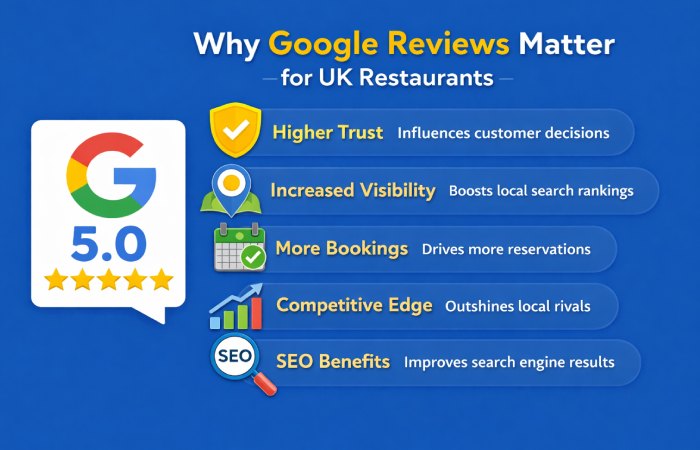
The importance of Google reviews goes beyond simple star ratings. They shape how your brand is perceived online and influence whether a customer chooses your restaurant over a competitor. Even a small increase in rating—such as from 4.2 to 4.5—can lead to a noticeable rise in bookings.
| Factor |
Impact on Restaurant Growth |
| Star Rating |
Directly affects customer trust and decision-making |
| Review Volume |
Signals popularity and credibility |
| Recency |
Shows that your business is active and relevant |
| Owner Responses |
Builds transparency and engagement |
| Keywords in Reviews |
Improves local SEO visibility |
Restaurants that maintain a steady flow of recent, high-quality reviews are more likely to dominate search results and attract repeat customers.
Understanding Google Review Rules in the UK
Before implementing any strategy, it is essential to understand Google’s policies. The UK has strict consumer protection standards, and misleading reviews can damage both your reputation and legal standing. Google explicitly prohibits fake reviews, incentivised feedback, and review gating practices.
| Allowed Practices |
Prohibited Practices |
| Asking for honest feedback |
Offering discounts for reviews |
| Sharing direct review links |
Buying fake reviews |
| Using QR codes for convenience |
Posting reviews on behalf of customers |
| Responding to all reviews |
Filtering only positive reviewers |
Following these guidelines ensures your restaurant builds a trustworthy and sustainable online presence.
Creating a Review-Worthy Customer Experience
The foundation of getting more reviews lies in delivering an exceptional dining experience. Customers are naturally more inclined to leave feedback when they feel delighted, surprised, or emotionally connected to their visit. This includes everything from food quality and presentation to service and ambience.
A memorable experience does not always require luxury; consistency, cleanliness, and friendly staff often matter more. When customers feel valued and satisfied, they are far more likely to share their experience online.
| Experience Element |
Key Focus Area |
| Food Quality |
Taste, freshness, consistency |
| Service |
Friendly, attentive, quick |
| Ambience |
Clean, comfortable, inviting |
| Speed |
Efficient service and delivery |
| Payment Process |
Smooth and hassle-free |
Restaurants that consistently deliver positive experiences naturally generate more organic reviews without aggressive marketing.
Asking for Reviews at the Right Time
Timing plays a crucial role in whether a customer decides to leave a review. The most effective moment is immediately after a positive interaction, such as when a customer compliments the food or expresses satisfaction.
Instead of making generic requests, staff should ask naturally and politely. For example, a simple line like, “We’re glad you enjoyed your meal—would you mind sharing your experience on Google?” can be highly effective when delivered at the right moment.
| Situation |
Best Timing Strategy |
| After a compliment |
Ask immediately |
| While presenting the bill |
Include a gentle request |
| After takeaway pickup |
Add message on packaging |
| Post-delivery |
Send follow-up message |
When the experience is fresh in the customer’s mind, the likelihood of receiving a review increases significantly.
Making the Review Process Effortless
One of the biggest barriers to getting reviews is inconvenience. Even satisfied customers may not leave feedback if the process requires too many steps. Simplifying the process can dramatically improve response rates.
Providing a direct Google review link or QR code eliminates friction and allows customers to leave feedback within seconds. This convenience is especially important in fast-paced dining environments.
| Method |
Description |
Effectiveness |
| QR Codes |
Scan and review instantly |
Very high |
| Direct Links |
Shared via SMS or email |
High |
| Receipts |
Printed review links |
Medium |
| Table Cards |
Visual reminders |
Medium |
| NFC Tags |
Tap-to-review technology |
Growing trend |
Reducing effort for the customer is one of the simplest yet most effective ways to increase reviews.
Using Follow-Ups to Encourage Reviews
Follow-up communication is a powerful strategy for capturing reviews after the dining experience. Many customers intend to leave feedback but forget, so a timely reminder can make a significant difference.
Automated SMS or email messages work particularly well because they reach customers when they are relaxed and more likely to respond. Personalised messages tend to perform better than generic ones.
| Channel |
Timing |
Example Approach |
| SMS |
Within a few hours |
Short and direct message with link |
| Email |
Same day |
Friendly thank-you with request |
| Loyalty Apps |
After repeat visits |
Personalised review invitation |
Consistency in follow-ups ensures a steady flow of new reviews over time.
Training Staff to Support Review Growth
Staff play a crucial role in generating reviews. Since they interact directly with customers, they are in the best position to identify satisfied diners and encourage feedback.
Training should focus on natural communication rather than scripted requests. Employees should understand when and how to ask without making customers feel pressured.
| Training Area |
Focus |
| Awareness |
Importance of reviews |
| Timing |
Ask after positive experiences |
| Communication |
Friendly and natural tone |
| Personalisation |
Mention customer experience |
| Consistency |
Make it part of routine |
A well-trained team can significantly increase review volume without additional marketing costs.
Responding to Reviews Effectively
Responding to reviews is just as important as collecting them. When customers see that a restaurant actively engages with feedback, it builds trust and encourages others to share their experiences.
Positive reviews should be acknowledged with gratitude, while negative reviews should be handled professionally and constructively. A thoughtful response can turn a dissatisfied customer into a loyal one.
| Review Type |
Recommended Response |
| Positive |
Thank and personalise message |
| Neutral |
Acknowledge and improve |
| Negative |
Apologise and offer resolution |
According to Google’s official guidance, businesses that respond to reviews are viewed as more trustworthy and customer-focused.
Handling Negative Reviews Professionally
Negative feedback is inevitable, but it should not be feared. Instead, it should be seen as an opportunity to improve and demonstrate professionalism. A calm, respectful response shows potential customers that your restaurant values feedback and is committed to quality.
Avoid defensive or emotional replies. Instead, focus on resolving the issue and inviting the customer to return.
| Step |
Action |
| Acknowledge |
Thank the reviewer |
| Apologise |
Show empathy |
| Resolve |
Offer solution |
| Follow-Up |
Encourage return visit |
Proper handling of negative reviews can enhance your reputation more than having no negative reviews at all.
Maintaining Consistency in Review Growth
Consistency is the key to long-term success. Google values a steady stream of reviews rather than sudden spikes. Restaurants should aim to generate reviews regularly through daily operations rather than one-time campaigns.
Building a system that integrates review requests into your workflow ensures continuous growth and improved rankings.
| Timeframe |
Target Goal |
| Weekly |
5–10 reviews |
| Monthly |
20–40 reviews |
| Quarterly |
Sustained growth |
Over time, this consistent approach leads to stronger visibility and increased customer trust.
Practices to Avoid
While it may be tempting to take shortcuts, unethical practices can harm your business. Buying reviews or offering incentives not only violates Google’s policies but can also damage your credibility if discovered.
Authenticity is essential. Customers can often detect fake reviews, and trust is difficult to rebuild once lost.
| Practice |
Risk |
| Buying reviews |
Account penalties |
| Fake accounts |
Review removal |
| Incentives |
Policy violations |
| Review gating |
Loss of trust |
Maintaining ethical practices ensures long-term success and compliance with UK regulations.
Conclusion
Getting more Google reviews for your UK restaurant is not about shortcuts or aggressive tactics. It is about creating a system that combines excellent service, smart timing, and customer convenience. By focusing on delivering memorable experiences, simplifying the review process, and engaging with feedback, restaurants can steadily increase their review count and improve their online reputation.
Over time, these efforts lead to higher search rankings, greater customer trust, and increased revenue. In a digital-first world, your Google reviews are one of your most valuable marketing assets—investing in them is essential for long-term growth.